This is our own video: Umar unboxing Apple's new OLED iPad mini the day it landed on our desk, and putting it next to the old model and the iPhone Duo. It is a first-impressions piece, not a full review. We say so in the video ("more to come soon"), and we keep to what we actually did on camera here.
Contents
Umar calls the iPad mini his favourite iPad ever, so the OLED version was the one he wanted to see first. Here is what stood out.
In the box, and the nano-texture test
The box holds the iPad, a power brick and a USB-C to USB-C cable. Because our unit has the nano-texture glass, there is also a separate cleaning cloth. Fingerprints on the nano-texture screen come off super easily with it, Umar says.
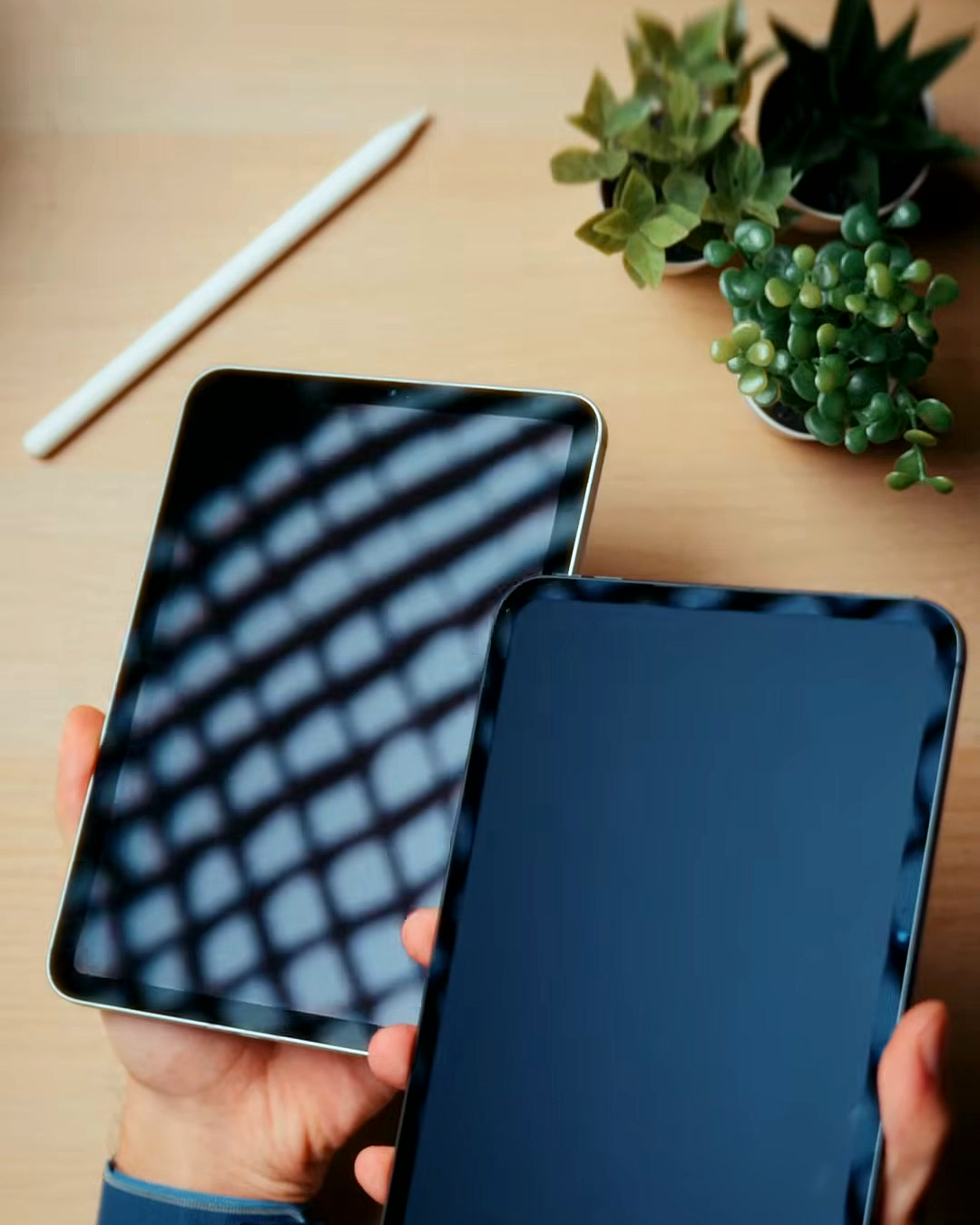
That is the biggest visual difference he found between the two glass types. With the softbox over the desk, the whole grid is visible on the glossy screen. On the nano-texture one the reflection is soft. If you use a tablet near windows or under studio lights, this is the part to pay attention to.
Bezels, thickness and brightness against the old iPad mini
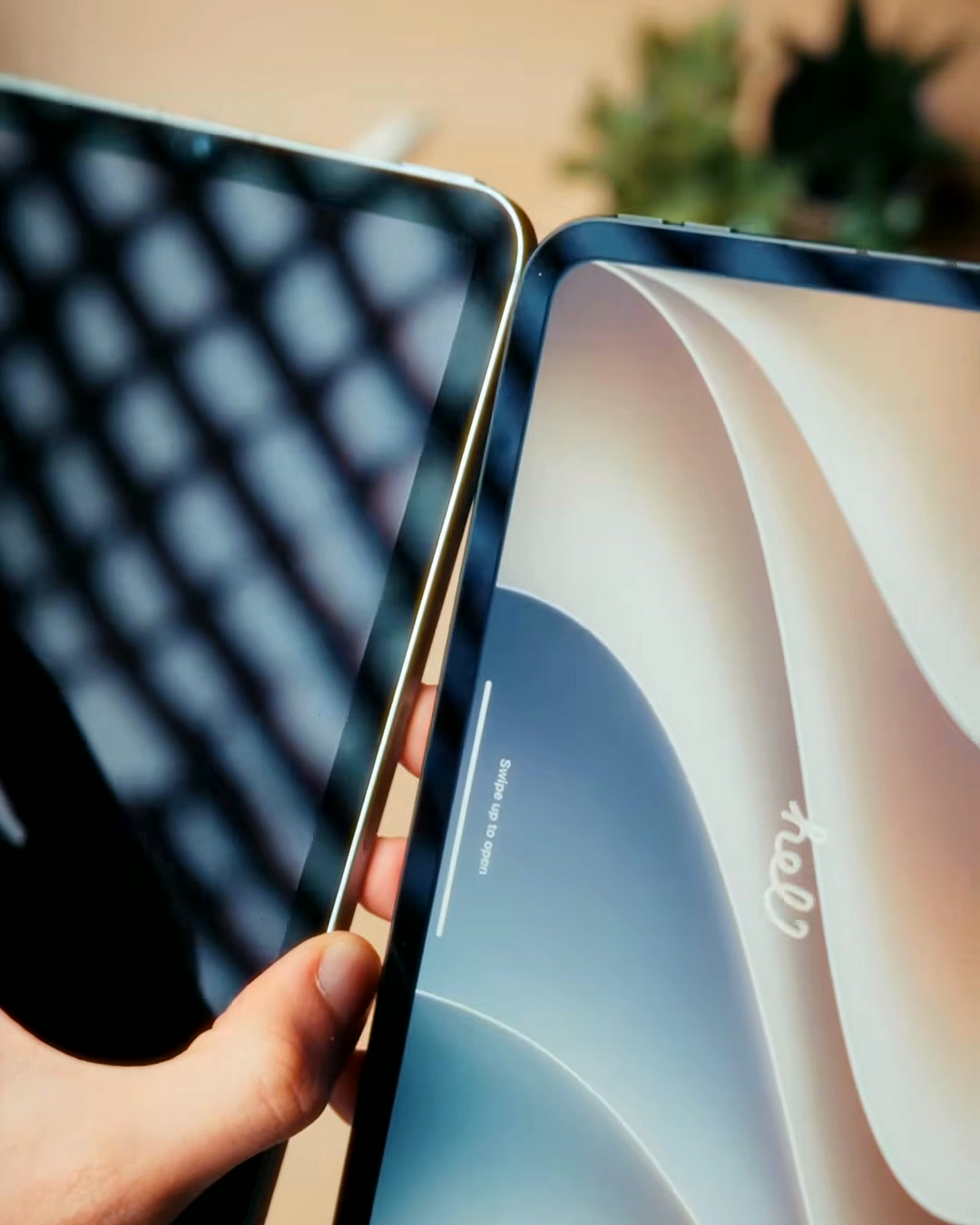
Umar puts the bezels at 24% smaller than before and the body noticeably thinner. The front camera has also moved: on the previous iPad mini it sat on the short edge, and it is now on the long edge, which is where it sits when you hold the tablet sideways for a call.
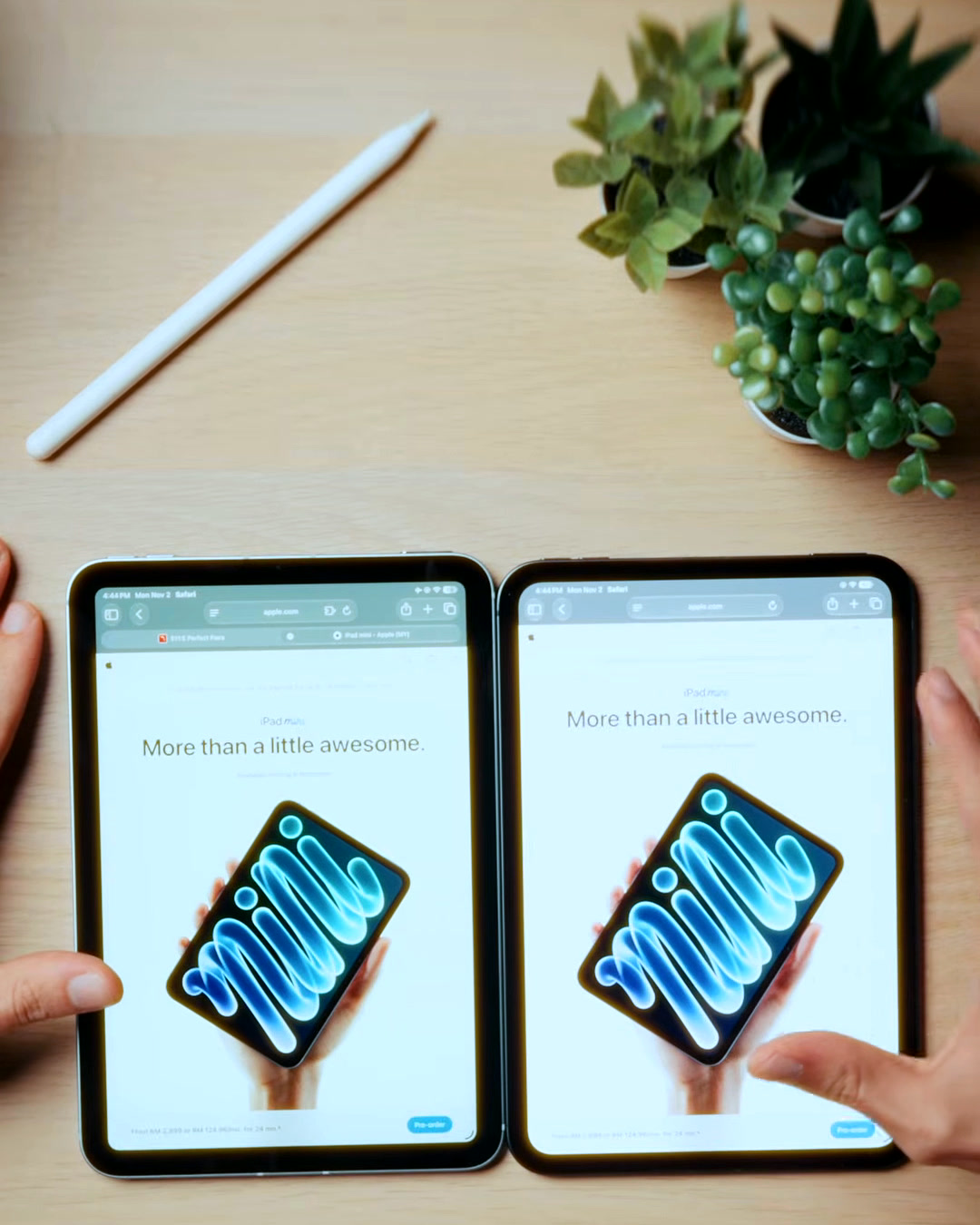
With both screens showing the same page, the new one looked a lot brighter to us, with a brighter white point and a slightly cooler colour tone. The blacks are properly deep, as you would expect from OLED. These are our eyes on one desk, not lab measurements.
Next to the iPhone Duo
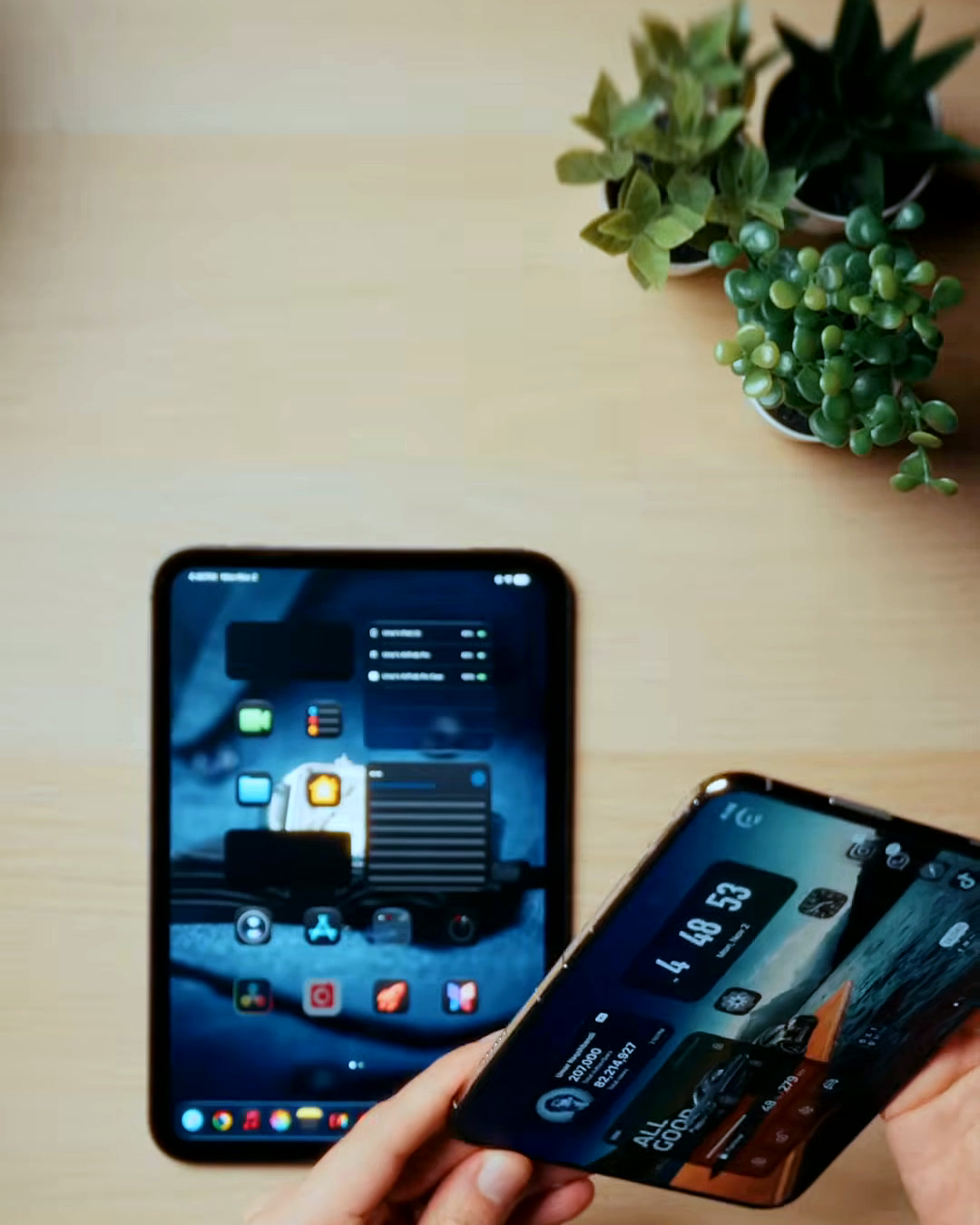
The comparison we expect most people to want is the iPad mini against the iPhone Duo. Closed, the Duo is tiny next to the tablet. Once the Duo is opened, the two are much closer in size, and that is the shot above. The iPad mini has the A20 Pro chip, which Umar notes is the same as in the iPhone 18 Pro and the iPhone Duo, so he expects performance to be significantly better than the previous iPad mini.
The letdown: 60Hz
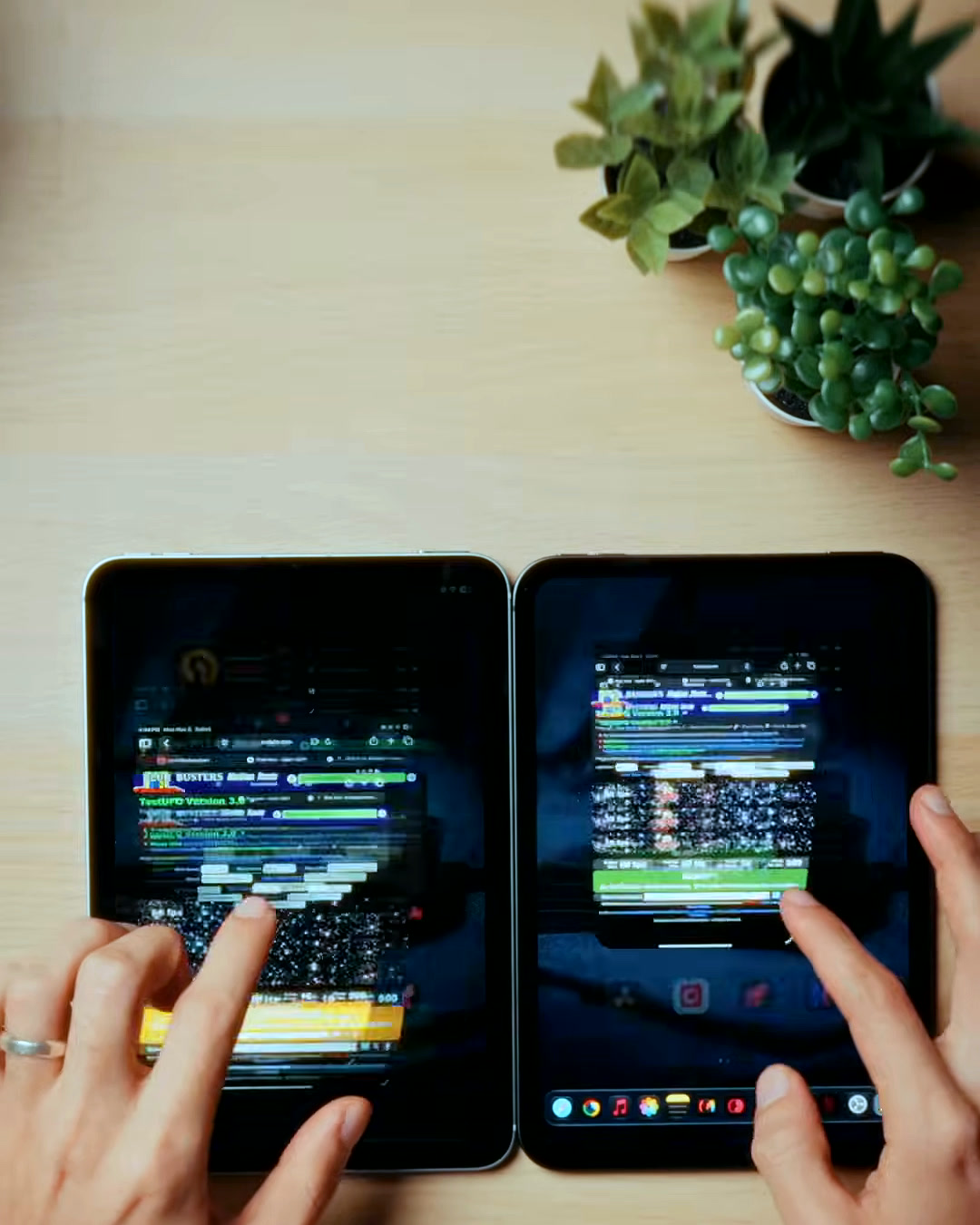
Umar was hoping for 120Hz and the screen is 60Hz. Swiping out of apps and between them looks and feels almost the same as the previous generation, and the animations load the same way. Next to the iPhone Duo, which scrolls noticeably more smoothly, the difference shows. On the plus side, the edge of the screen works as a multitasking window you can snap to the side.
No speaker grills, and it sounds fuller
The tablet is now IP67 dust and water resistant, and one reason is that Apple removed the speaker grills completely. Umar played audio on the old iPad first, then on the new "acoustic display", and his reaction on camera was "this sounds so much better". It was louder and fuller, balanced, and it sounded as if it came from the screen itself. A practical bonus: there is no grill to cover with your hand when you game. Apple's own spec page lists the water rating as tested to one metre for up to 30 minutes in lab conditions, and says liquid damage is not covered by warranty.
What it costs in Malaysia
We tracked the price in our own report: Apple's OLED iPad mini costs RM2,999 in Malaysia, RM300 above the old model.
| Model (Wi-Fi) | Price |
|---|---|
| 128GB | RM2,999 |
| 256GB | RM3,399 |
| 512GB | RM4,299 |
The nano-texture glass in our video is a RM400 option on the 256GB and 512GB models, so a 256GB Wi-Fi unit with it is RM3,799. If you are weighing the iPad mini against Apple's foldable, see what the iPhone Duo costs against the Galaxy Z Fold8 and our iPhone Duo Malaysia price breakdown. For the other end of Apple's tablet range, a 2TB model, read what an iPad Pro costs here.
What we want to test next
Umar ends the video on the question we want answered: can this screen and chip handle serious artwork, or even editing a video on the tablet? We will report back once we have. If shooting and editing video on Apple hardware is your interest, our Pocket Cinematic course starts with the phone you already own.