If you have ever stared at a text from a number you do not recognise, weighing up whether the "parcel on hold" or the "bank security alert" is real, Google is building a tool for that exact moment. Its Messages app is getting scam detection powered by Gemini, the company's AI, built to read messages from senders you do not know and warn you when one looks like a scam.
Contents

Google set out on 14 October a stronger set of defences it calls Enhanced protection, an opt-in setting inside Google Messages. Switch it on and, the company says, Scam Detection will tap "Google's most capable cloud Gemini models to evaluate complex message context" when you are talking to an unknown sender, so it can work out a scammer's intent faster. Google says this runs in a walled-off system it calls Private AI Compute, "keeping it private to you and inaccessible to anyone else," including Google.
Two other pieces come with it. On-device Gemini Nano checks whether an unfamiliar link is safe before you tap it, reading live web signals to catch sites a scammer registered minutes ago. And redesigned warnings give you a beat to pause before opening a link sent by a number not saved in your contacts. Google says the features are "rolling out in the coming weeks."
Why this matters in Malaysia
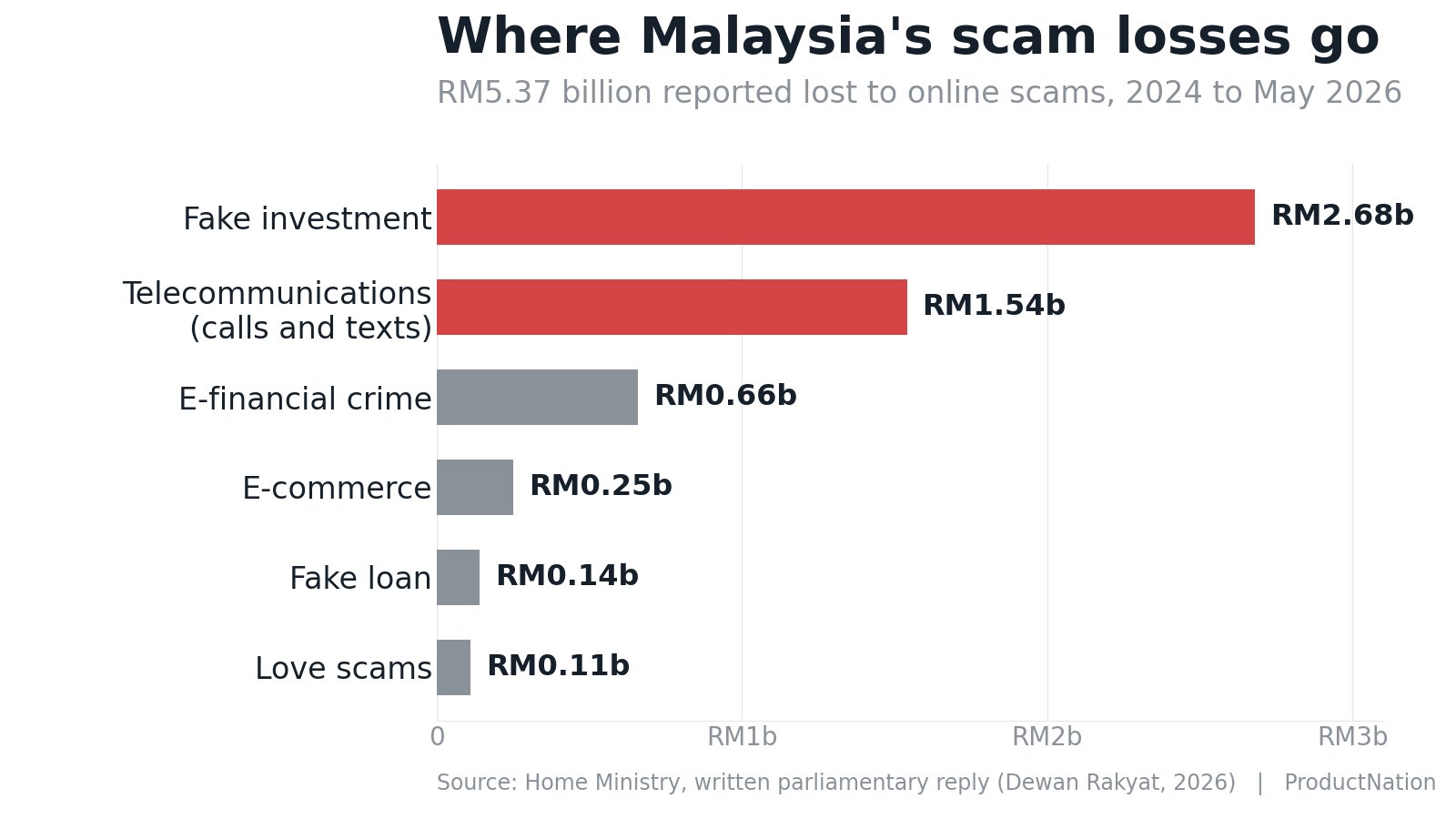
The timing is pointed. Malaysians lost RM2.97 billion to online scams in 2025, almost double the RM1.57 billion lost the year before, according to figures the Home Ministry gave Parliament. Over a longer window, RM5.37 billion was reported lost between January 2024 and May 2026. Fake investment schemes took the largest share of that total, and telecommunications-related scams were the second biggest at RM1.54 billion.

A scam that unfolds over a dozen friendly texts, the sort that ends with a victim moving money "to verify" an account, is hard for a person to spot in the moment and, Google argues, easier for a model that reads the whole thread. That is the gap this feature aims at. Malaysia has been working on the same problem from the policy side: the government has promised a Budget 2027 app for checking suspicious numbers and accounts, and the National Scam Response Centre, run by the Home Ministry with the police and Bank Negara, takes scam reports on a hotline. A warning built into the messaging app itself would meet people earlier, before they reply.
The catch
Google did not name Malaysia, or give a local date, when it set out the rollout, saying only that Enhanced protection is coming "in the coming weeks." It also needs the right hardware: the cloud Gemini check runs on recent, supported Android phones, such as newer Pixel and Samsung Galaxy models, rather than every handset, and the on-device link check needs a narrower list still. On top of that, it only helps people who use Google Messages as their Android texting app and who switch the setting on, and some of these protections have been limited to select countries before. It is part of a broader push to put AI between people and online threats, a push that cuts both ways, because the same wave of AI has raised new worries of its own, like the autonomous AI agents a Malaysian agency recently flagged.
For now, the practical rule has not changed: treat a link or a money request from an unknown number as hostile until it proves otherwise. If the Gemini-powered check does reach Malaysia, it will be one more reason to keep Google Messages as the default and to turn the setting on.