Alibaba has moved its Qwen artificial intelligence out of the chat window and into hardware you can wear, carry and type on. At the 2026 Apsara Conference, its annual technology showcase, the company revealed four Qwen AI devices: an agentic computer, a pair of smart glasses, its first AI earbuds and a pocket note-taker. For most Malaysian readers, who meet Qwen today only as a model running somewhere in the cloud, it is the clearest sign yet that the assistant is being built into things you hold.
The four Qwen AI devices Alibaba showed
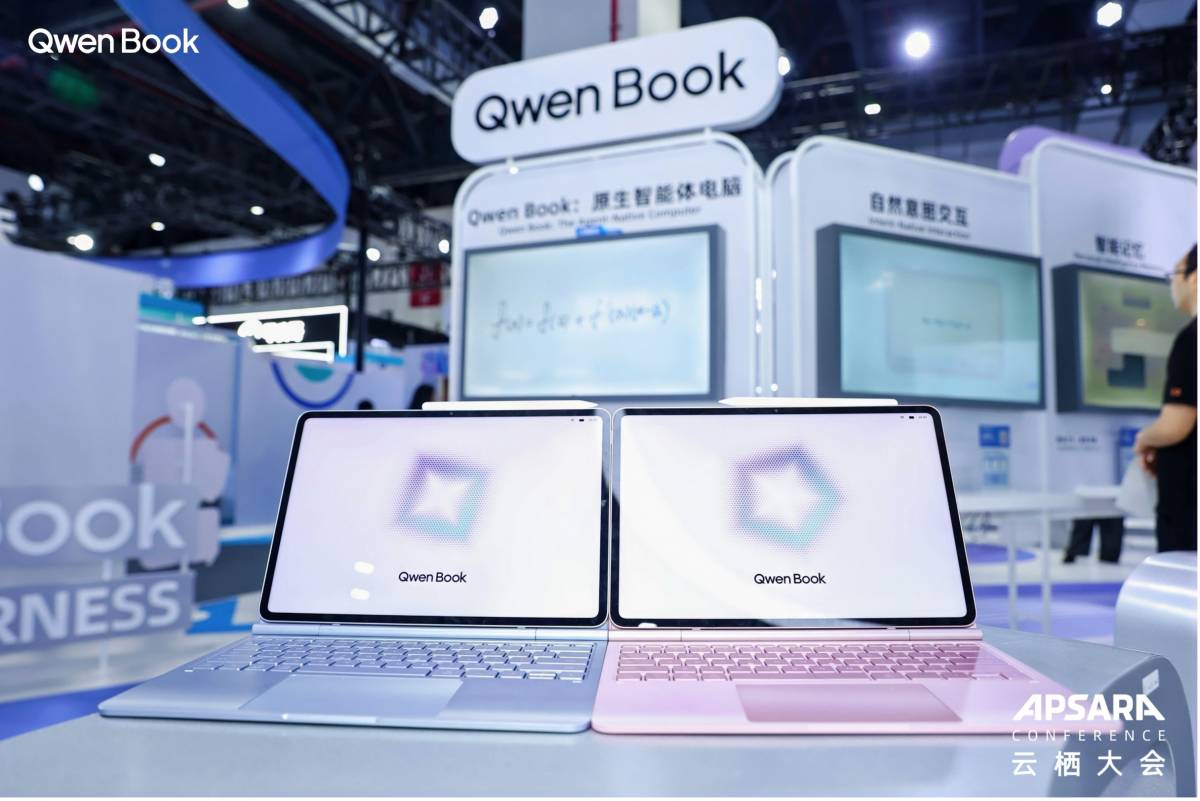
The headline product is Qwen Book, which Alibaba Cloud calls an agentic computer. It runs Qwen Desktop OS, an operating system built around the AI rather than bolted onto it, and folds Qwen's models, apps and cloud services into one stack. In Alibaba's demo, a user editing a slide deck speaks a command through the stylus, which doubles as a microphone, and the machine finds the file in the cloud, opens the right slide and makes the edit, with the changes waiting for approval on a phone.
The Qwen Glasses N1 and N1 Pro are the eye-catcher. Both capture first-person footage through a 50-megapixel sensor, and the Pro adds eye-tracking, so a wearer can trigger object recognition or pay by iris scan just by looking. Alongside them sits Qwen Clip, Alibaba's first AI earbuds, an open-ear clip-on design co-engineered with Bose that handles face-to-face translation, note-taking and voice commands. Pre-orders in China opened on 22 September, with sales from 13 October.
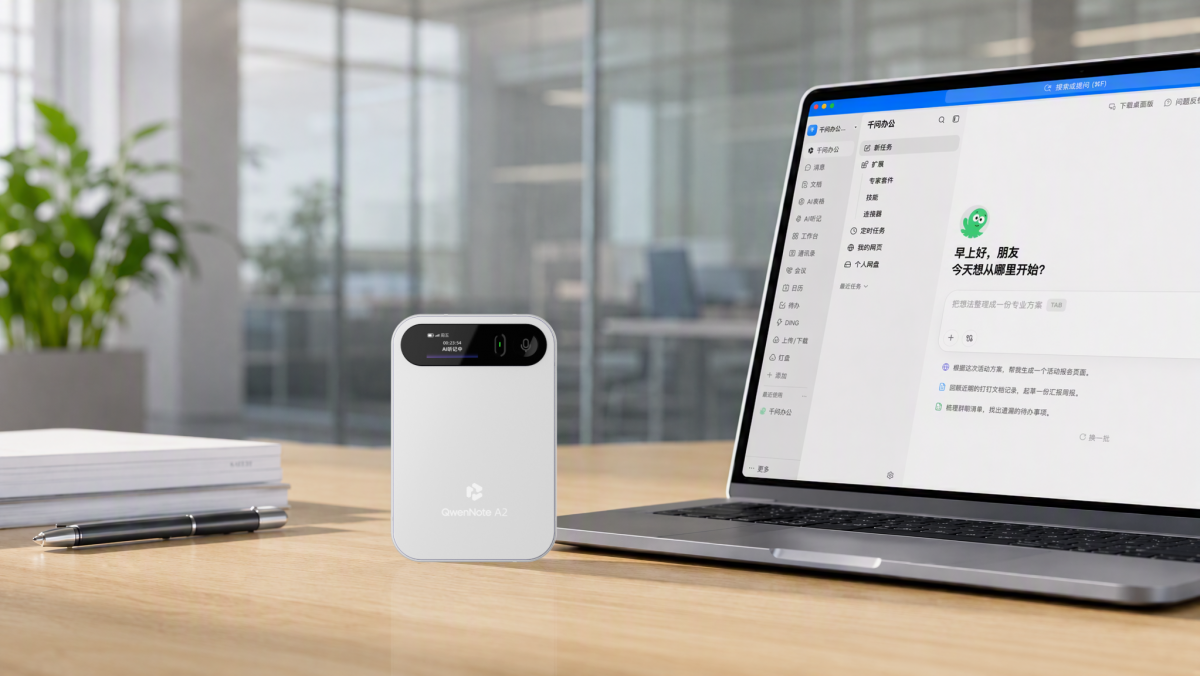
The fourth device, QwenNote A2, is a 67-gram recorder that turns real conversations into work. It carries six microphones with an eight-metre pickup range and its own 4G connection, records for up to 40 hours, and hands transcripts to QwenWork, Alibaba's workplace AI agent, to draft messages, book meetings or build a spreadsheet. Audio is encrypted in transit and deleted after transcription, with only text and summaries kept. It costs RMB 1,199 and went on sale on 22 September through Alibaba's Tmall.
Why hardware, and what reaches Malaysia
The launch fits a wider shift: the big AI names are no longer content to live inside an app, and are racing to own the device the assistant runs on. Smart glasses are the sharp end of that. Meta has already sold seven million pairs, a milestone that has run ahead of the laws meant to govern them, as we set out in our look at what Malaysian law does and does not reach when a stranger films you in public. Alibaba is now planting Qwen on the same kind of face-worn camera.
None of this hardware has a confirmed Malaysian release, and the glasses, earbuds and note-taker launched first for China. The software layer is closer than the devices. Alibaba runs a Malaysian data centre that it is expanding as part of an eight-market push, and QwenWork, the workplace agent the QwenNote feeds, is already in international beta. Alibaba has also been placing its Qwen agents inside other brands' phones, so its assistant may reach local buyers through a HONOR handset well before any Qwen-branded gadget does.
For now, the Apsara lineup is a preview of where Alibaba wants its AI to live: on your desk, on your face and in your pocket. Whether the hardware travels to Malaysia is the open question, but the Qwen software behind it already has a foothold here.