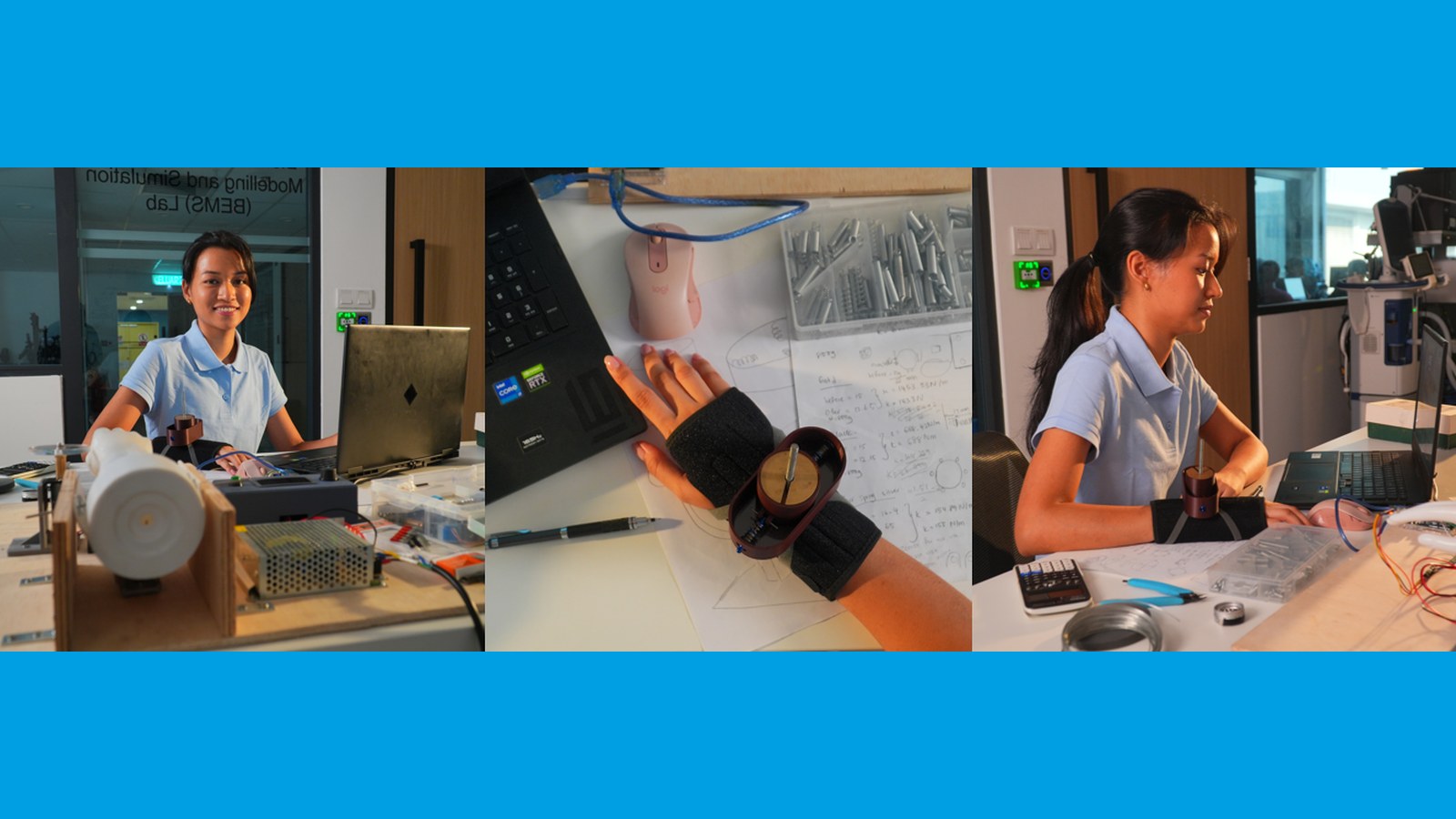
A 24-year-old engineering student has taken a trick used to keep skyscrapers steady in a storm and shrunk it onto a wrist, and it has just won her Malaysia's biggest design prize.
Hayley Nea Iaduray, a final-year engineering student at Monash University Malaysia, has been named the Malaysia National Winner of the James Dyson Award 2026 for ZeMor, a wearable device that reduces hand tremors without a battery. As the country's winner, she receives RM27,160 from the James Dyson Foundation and now advances to the international stage of the James Dyson Award, where global winners chosen by Sir James Dyson each take home up to RM162,999.
Contents
The Dyson name in Malaysia has mostly meant retail launches this year, from the Supersonic Travel hair dryer to the Spot+Scrub Ai robot vacuum. The Award is a different kind of Dyson story: it funds and platforms other people's engineering, not Dyson's own product line.
A skyscraper's trick, shrunk onto a wrist
ZeMor, short for "Zero Tremor", uses a miniaturised Tuned Mass Damper (TMD), the same kind of mechanism used to keep tall buildings such as Taipei 101 steady during earthquakes and typhoons. When a tremor occurs, an internal weighted mechanism inside the device moves in response, absorbing and dissipating the kinetic energy without needing batteries or electrical power.
Unlike conventional tremor devices built around a fixed mass, ZeMor can be tuned to different tremor frequencies by adding or removing weights, and it is built from readily available parts: slotted weights, steel ball bearings, spring-based dampeners and a 3D-printed housing. Iaduray developed and tested multiple prototypes over a year using a custom rig that simulated Parkinsonian tremors.
Why a tremor-easing wearable matters in Malaysia
Parkinson's disease is one of the fastest-growing neurological disorders in the world, now affecting more than twice as many people as it did 25 years ago, and researchers project the global number of cases could reach 25.2 million by 2050 as populations age. In Malaysia, an estimated 20,000 people live with Parkinson's, a figure projected to rise five-fold over the next two decades.
Tremors are among the disease's most visible symptoms, and they can make everyday tasks such as eating, writing and getting dressed increasingly difficult. Existing treatments, medication, deep brain stimulation surgery and rehabilitative therapy, can help, but cost and long-term accessibility remain real barriers for many patients, which is the gap ZeMor's battery-free, off-the-shelf design is aimed at closing.
"What excites me most is the possibility that a relatively simple piece of engineering could help people regain confidence in everyday tasks that many of us take for granted," Iaduray said.
Two more Malaysian inventions in the running
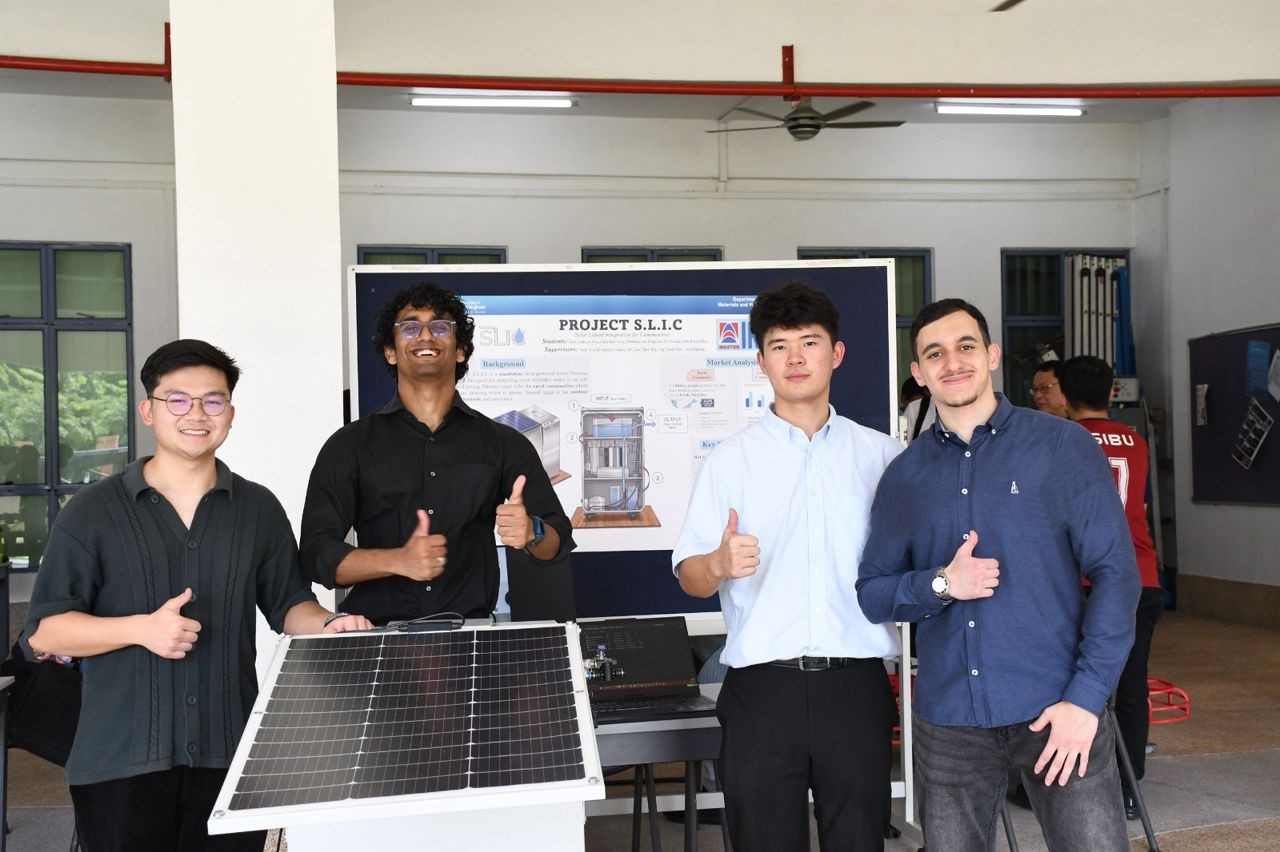
ZeMor was named alongside two national runners-up, both of which also progress to the international round. S.L.I.C. (Solar Liquid Integration for Communities), built by a team from the University of Nottingham, is a portable, solar-powered water purification unit designed for communities such as Pos Kemar in Perak, where clean water and reliable electricity are both hard to come by.
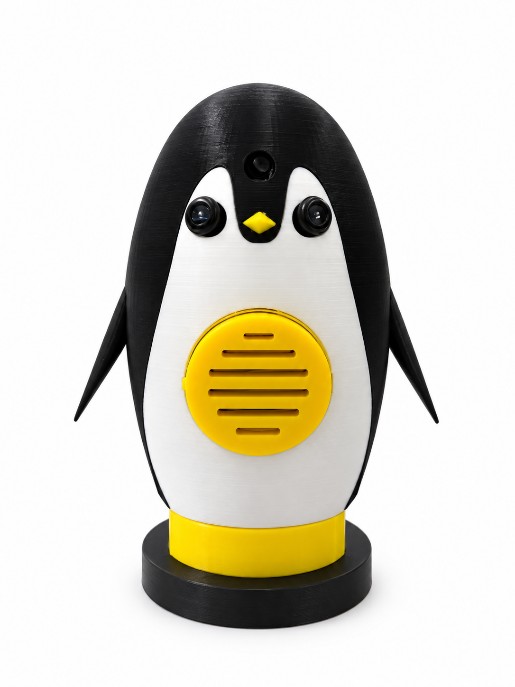
Pillay, designed by a team from Asia Pacific University, is a contactless vital-sign screening device shaped like a penguin, built to read a child's heart rate, breathing rate, fever and cough patterns without the discomfort of a conventional medical exam.
What's next for ZeMor
All three Malaysian entries now move into the Award's international stage, where a panel of Dyson engineers will pick a global Top 20 on 14 October, before Sir James Dyson selects the international winners on 4 November. Iaduray plans to take her current single-axis prototype and turn it into a multi-directional system that responds to tremors from more than one angle, and says the next phase will involve working with medical professionals and research partners to test the device with people who actually live with Parkinson's.
For a competition now in its 21st year, that is the point: an award built to reward engineers for solving real problems, judged this time by a Malaysian student who put the mechanics of a stabilised skyscraper on a wrist.