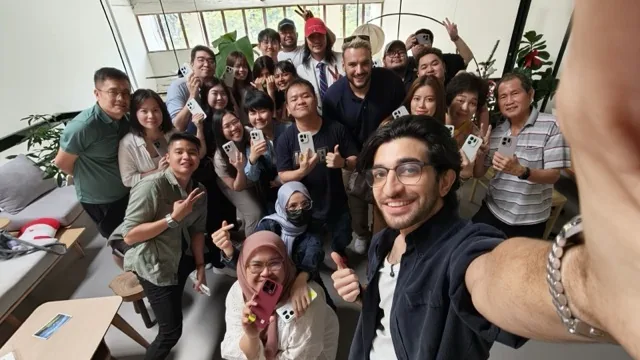
After an earthquake, the damage that matters most in a concrete building is often the damage nobody can see. A Philippine structural engineer has turned that problem into a cheap sensor, and it has just won one of the two James Dyson Award 2026 global prizes, worth RM162,999 (GBP30,000) each.
The other prize goes to a team from Harvard University for a headset that screens athletes for concussion on the sidelines, without a trip to a clinic.
Contents
The two James Dyson Award 2026 global winners
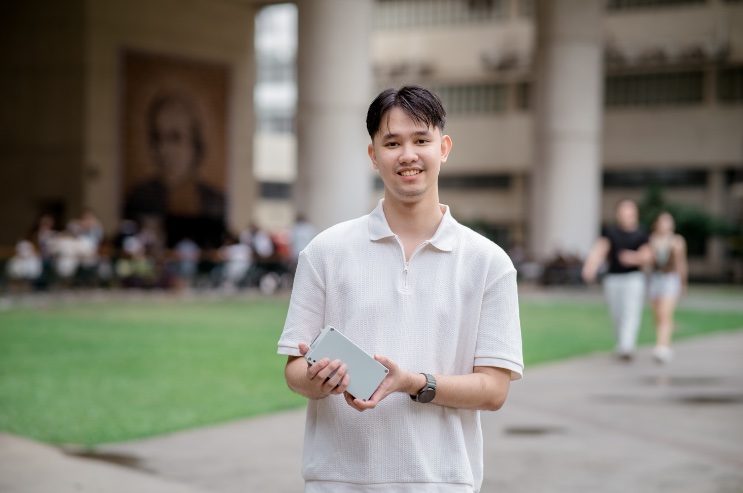
- Sentinel (Philippines), Global Sustainability Winner: a building damage sensor by Aldrei Ong, a structural engineer and De La Salle University graduate.
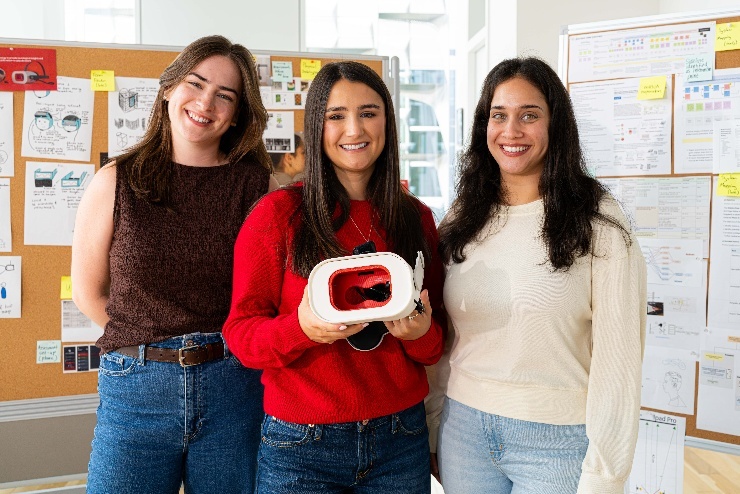
- Rumble Rims (United States), Global Medical Winner: an infrared eye-tracking headset by Radhika Saran, Cleo Pontone and Sophia DeVito of Harvard University.
Sir James Dyson chose both from the international top 20, which was drawn from 2,294 entries across 28 countries and regions, the largest field the competition has had. Sentinel was one of three Southeast Asian inventions in that shortlist, as we reported when the Dyson Award top 20 was announced in October.
How Sentinel spots hidden cracks
Reinforced concrete buildings already use small spacer blocks to hold steel bars in place while the concrete is poured. Ong makes those blocks out of self-sensing concrete mixed with conductive materials, so electricity can flow through them. When the concrete cracks, its electrical resistance shifts.
Electrodes link each block to a small electronic module that compares new readings against the original baseline. A large enough change is sent wirelessly to an online dashboard, where engineers can track a building's condition remotely instead of waiting for a site inspection.
Because the sensor replaces a part the builder would install anyway, it adds no separate structural element. Ong mixed, cured and tested more than 125 concrete samples over a year of master's research, and Sentinel blocks are now embedded in a building in the Philippines for real-world monitoring. His next steps are a custom circuit board to replace the hand-soldered electronics, and versions that can be retrofitted to existing buildings.

Why a quake sensor matters in Malaysia
Malaysia sits outside the region's main earthquake belts, but Sabah does not. Ranau records the most earthquakes in the country, and the magnitude 6.0 Ranau earthquake in 2015 killed people and damaged buildings. Monitoring has expanded there since, including early warning and fault-movement projects. Today, structural damage is still mostly found through periodic inspection, which is slow when a whole town needs checking after a quake.
Rumble Rims: concussion checks on the sidelines
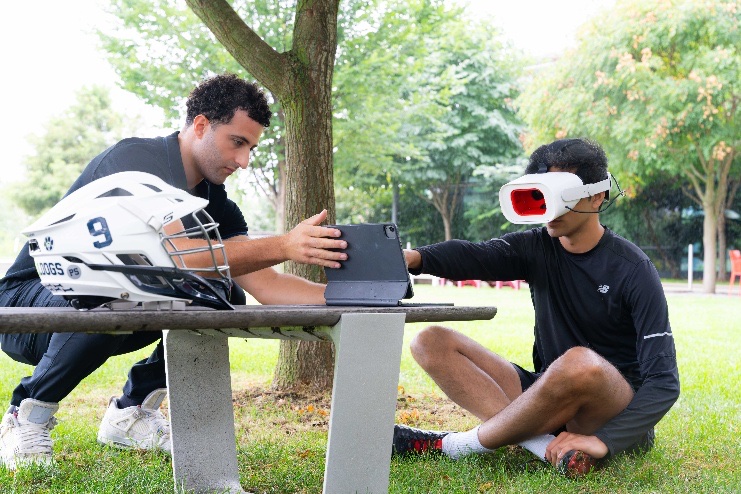
Concussion symptoms can take up to 72 hours to appear, and the objective tests that exist are usually expensive and clinic-based, out of reach for most school and grassroots teams. Rumble Rims uses side-mounted infrared cameras and 45-degree dichroic mirrors to watch how a player's eyes follow, fixate and move during a two to three minute test.
A mobile display turns those measurements into real-time guidance on whether the player should come off and see a doctor, and a recovery dashboard logs repeat tests over the following days. The team is clear that it is a screening tool, not a diagnosis, and that return-to-play decisions stay with a qualified medical professional. A higher-fidelity prototype, testing with athletes and coaches, and pilots with schools are next.
What it means for young Malaysian inventors
The award is open to Malaysian students every year. This year's national winner, Monash University Malaysia graduate Hayley Nea Iaduray, took RM27,160 for ZeMor, a battery-free wearable that reduces Parkinson's tremors. Both global winners this year began as student research projects, and both reuse ordinary parts, a construction block and a camera headset, to make a safety check cheap enough to use widely.