

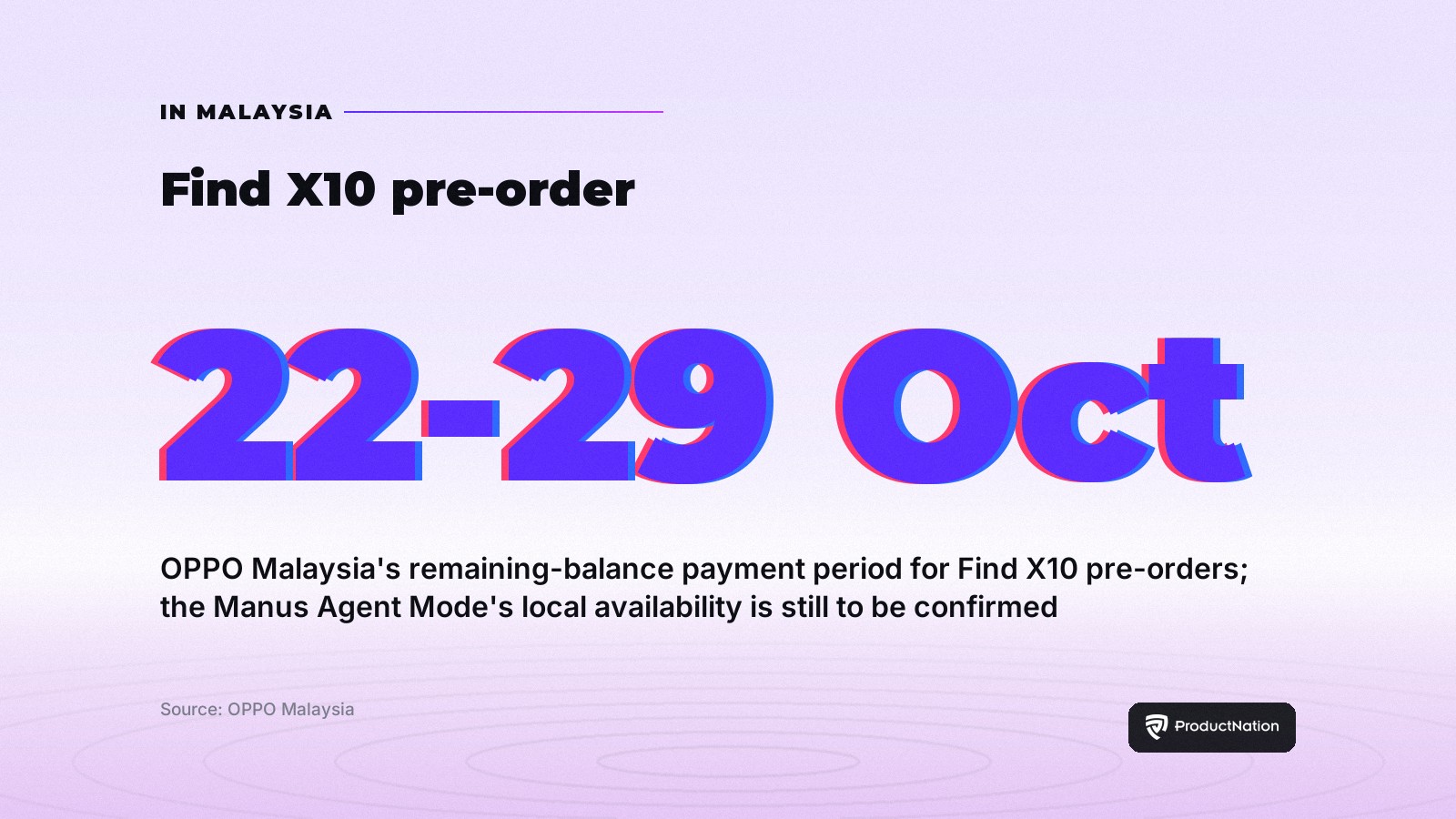
The pitch, in OPPO's framing, is simple: a normal assistant answers a question, while an "agent" is meant to take a goal and work through the steps itself. Manus is one of those agents. In Malaysia, the agent's most visible connection is a phone: OPPO's Find X10 Series, which OPPO built the Manus agent into and which is now up for pre-order here (OPPO Malaysia's remaining-balance payment runs 22 to 29 October). OPPO says the Manus-powered Agent Mode debuts on the Find X10 Series. Whether that mode is switched on for Malaysian units is a separate, unresolved question: OPPO says its AI features vary by market and that it will name the supported markets later.
One signal sits in our own data. In our Google Search Console, our pages appeared about 250 times in Malaysian results for "Manus AI" in the week of 14 to 20 October (impressions where we already rank, not unique searchers or every search in the country). That is our own visibility, not a market-wide count, and it cannot prove what drove it, but the timing lines up with OPPO's mid-October announcement of the tie-up, which we covered here.
Contents
Quick facts
- What it is: an AI agent meant to carry out multi-step tasks for you, not just a chatbot that answers.
- Where it shows up: OPPO's AI Mind Pilot, in a new Agent Mode built into the Find X10 Series (ColorOS 17). The phone is on pre-order in Malaysia; OPPO's published materials reviewed for this article do not name Malaysia as a market where the feature is switched on.
- On its own: Manus is also a standalone product, with a free tier and paid plans that run on monthly usage credits.
- Privacy: OPPO says local file and photo jobs run on the phone, and it asks for confirmation before relevant content is sent out for a task.
What an agent does that an assistant does not
The difference is what happens after you ask. OPPO's own example is a trip: you ask it to organise your travel, and it gathers the flight tickets, hotel bookings, restaurant reservations and attraction details already scattered across your apps, then builds a day-by-day itinerary. The same pattern is pitched at everyday work, pulling photos and files together into a presentation from a single prompt. Manus describes its part as bringing "agentic capabilities" to the phone, and in the announcement OPPO's software engineering president Kai Tang calls it a shift "from answering questions to helping users get things done".
We went hands-on with the phone it debuts on:
What stays on your phone
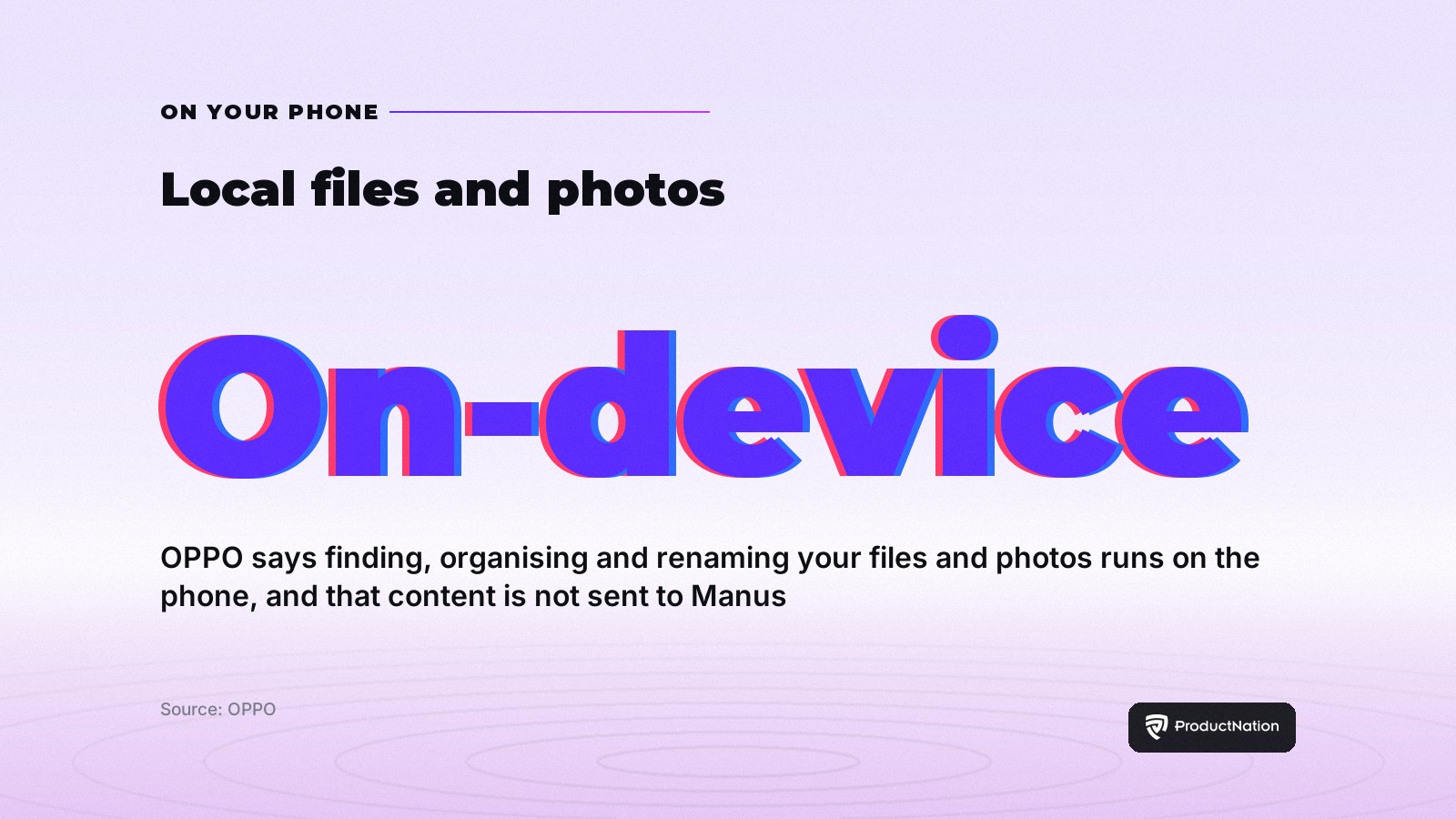
The part worth reading twice is about your data. OPPO says ColorOS 17 uses on-device models for local jobs such as finding, organising or renaming your files and photos, and that this content is not shared with Manus. When a task genuinely needs outside processing, the agent is designed to ask for your explicit confirmation before that relevant content is uploaded. That default matters for a tool that, by design, works across your files, photos and travel plans. We have written before about AI agents being pitched to act on people's behalf, which is exactly why where the work runs is not a small detail.
What Manus costs on its own
On the Find X10, the agent is part of OPPO's AI Mind Pilot, which OPPO says combines Manus's capabilities with its own ColorOS software. Using Manus on its own is a separate product from the phone. It keeps a free tier you can start on without paying, and sells paid plans on top that run on monthly "credits" included with each plan, with heavier or longer tasks using them up faster, so a given plan stretches further or less far depending on how hard you work it. For current prices, Manus's own plans page is the source to check, since subscription pricing moves.
A practical first step is the free tier: a no-cost way to judge for yourself whether an agent saves time or just moves the clicking around. What the Find X10 does is make that question concrete for Malaysian buyers weighing a pre-order, even as OPPO has yet to confirm when local units get the agent switched on. On its own, Manus still offers a free tier to start.


