

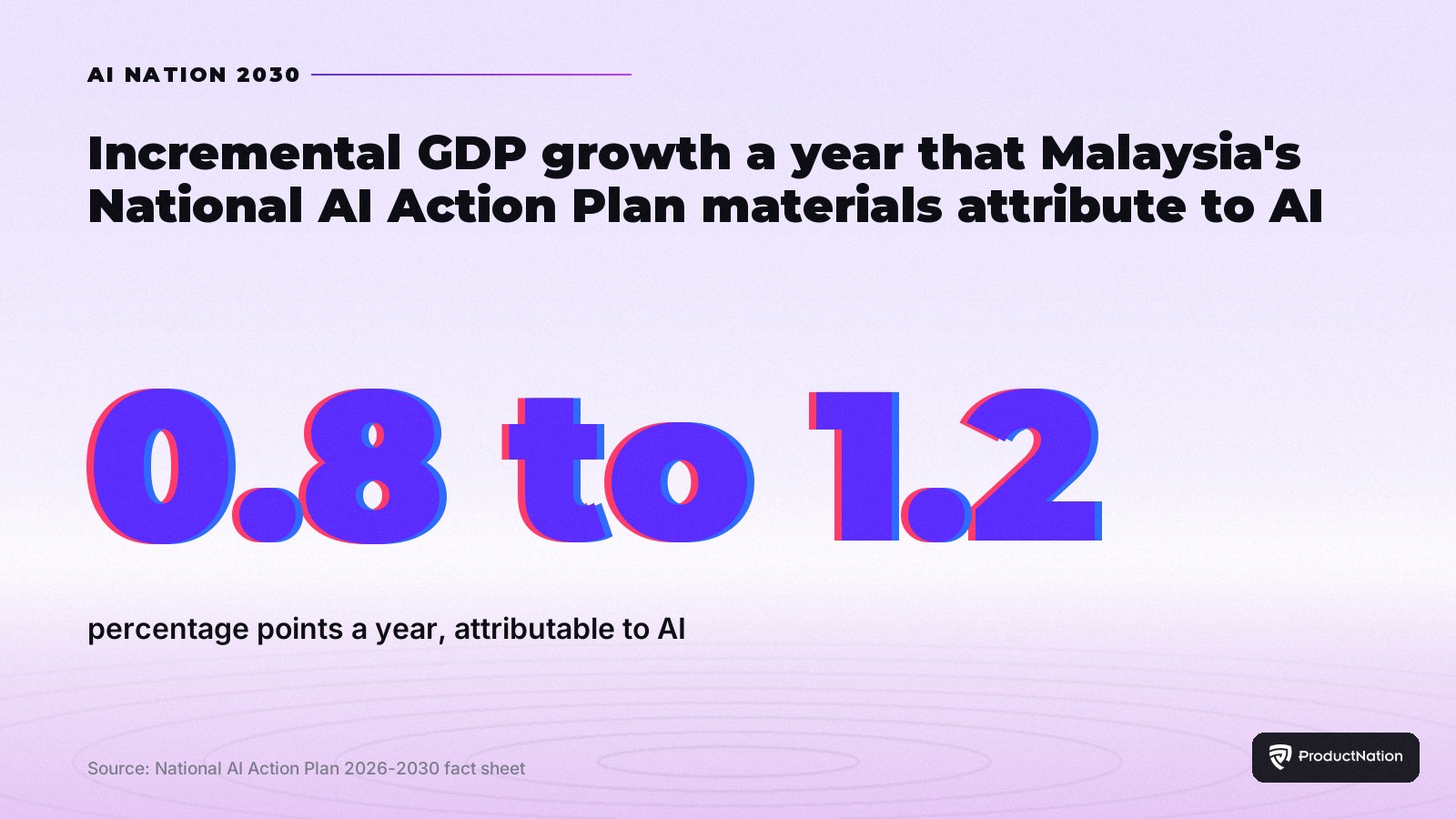
Malaysia has put numbers on its artificial-intelligence ambitions, and its own planning materials give two of them. The National AI Action Plan 2026-2030 document targets up to 300,000 new jobs attributable to AI by 2030, while the plan's published fact sheet targets 300,000 to 500,000 new AI-related jobs. The fact sheet also targets between 0.8 and 1.2 percentage points of incremental GDP growth a year. The plan is led by AI Malaysia Berhad under the Digital Ministry, and it is the roadmap for the country's "AI Nation 2030" goal.
Quick facts
- Up to 300,000 jobs "attributable to AI" in the plan document; 300,000 to 500,000 new "AI-related" jobs in its fact sheet.
- 0.8 to 1.2 percentage points of incremental GDP growth a year, per the fact sheet.
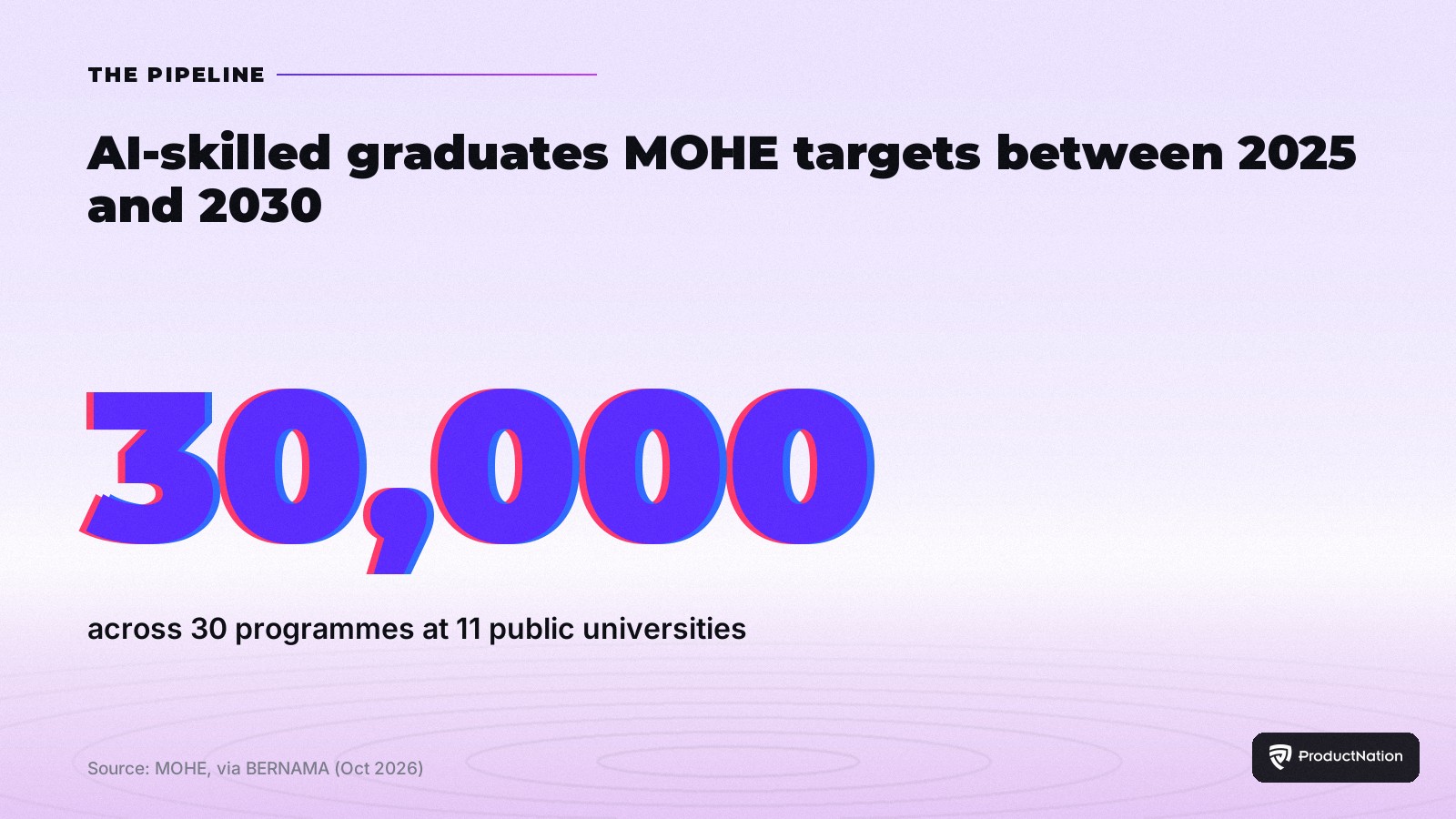
- 30,000 AI-skilled graduates the Ministry of Higher Education is targeting between 2025 and 2030.
- Led by AI Malaysia Berhad under the Digital Ministry, towards the "AI Nation 2030" goal.
Building the workforce for those roles is a separate effort running in parallel. The Ministry of Higher Education is aiming to produce 30,000 AI-skilled graduates between 2025 and 2030, Higher Education Minister Datuk Seri Dr Zambry Abdul Kadir told Parliament in October, as reported by the national news agency Bernama. The ministry describes 30 specialised AI programmes across 11 public universities, with AI elements to be embedded in 80 per cent of bachelor's degree courses at public institutions, supported by upskilling, work-based learning and stackable programmes.
These targets sit inside a wider national digital shift, one we have been tracking in our own analysis of the official GDP figures and in our coverage of events such as the AI Malaysia Takeover. The targets and the pipelines are now on paper. What the figures cannot yet show is the baseline, the method behind the projections, or how an "AI-attributable" job differs from an "AI-related" one, so the real test will be how quickly Malaysia can train and place the people these new roles will need.


