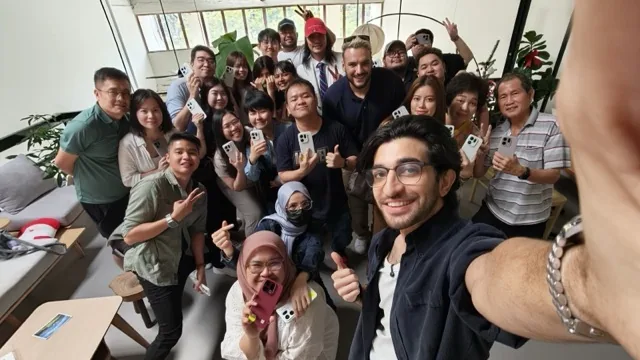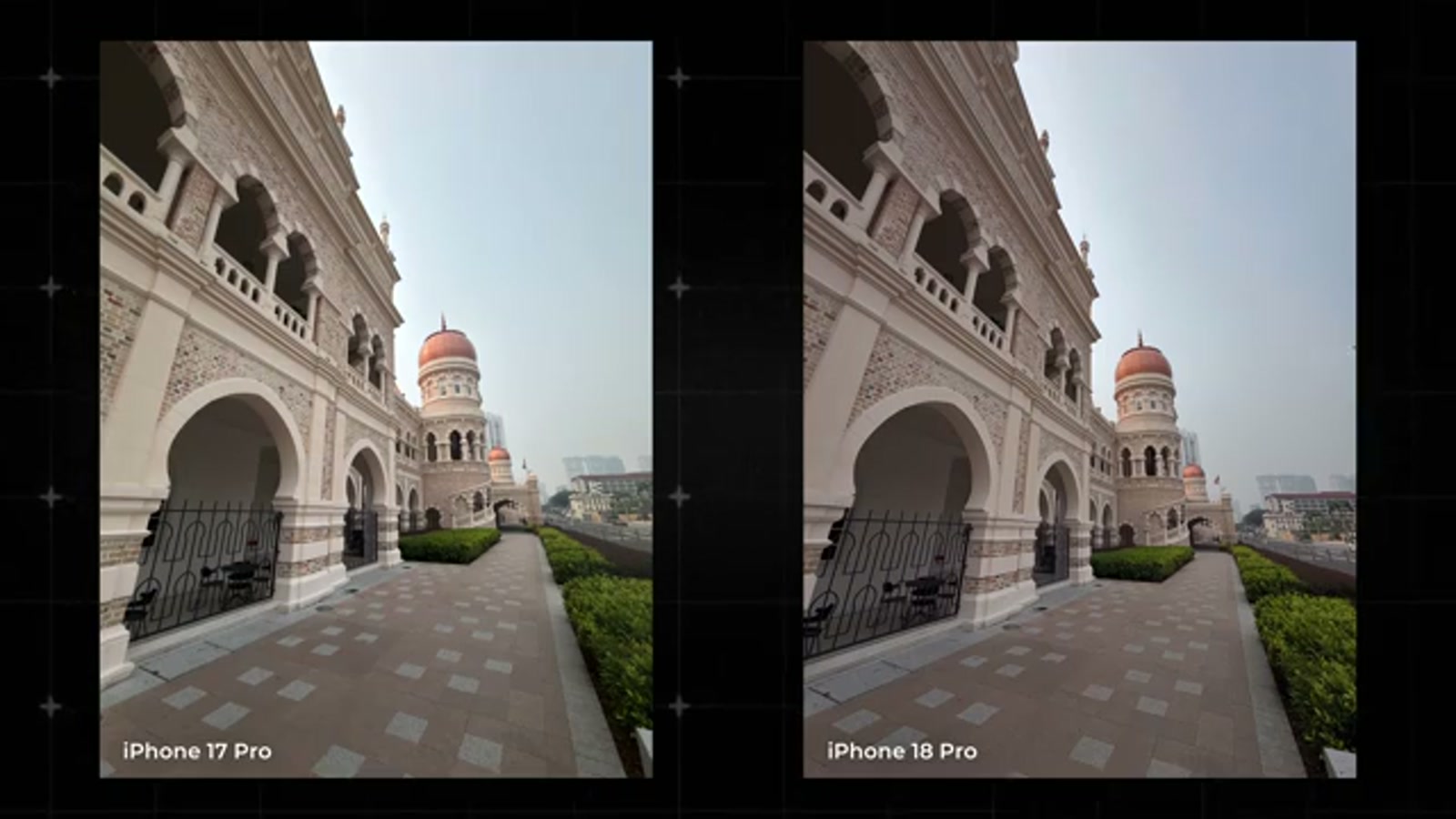
This is our own footage: we shot the iPhone 18 Pro side by side with the iPhone 17 Pro for a week, comparing photos, portraits, AI editing and video, and the video above is the full test.
We covered the variable aperture before Apple confirmed it, in our pre-keynote read of what it would change for filming. This is what it actually does, shot back to back against last year's phone.
Contents
What stayed the same
The ultrawide, telephoto and front cameras are unchanged from the iPhone 17 Pro on paper, and they shoot that way too. Pixel peeping both phones down to the smallest details in the frame shows almost no difference in dynamic range, colour or skin tones. Both lenses still top out at 4x optical and 8x optical quality with up to 24x digital zoom, and there is still no periscope lens on either phone, which is the one upgrade a lot of people were hoping for and did not get.
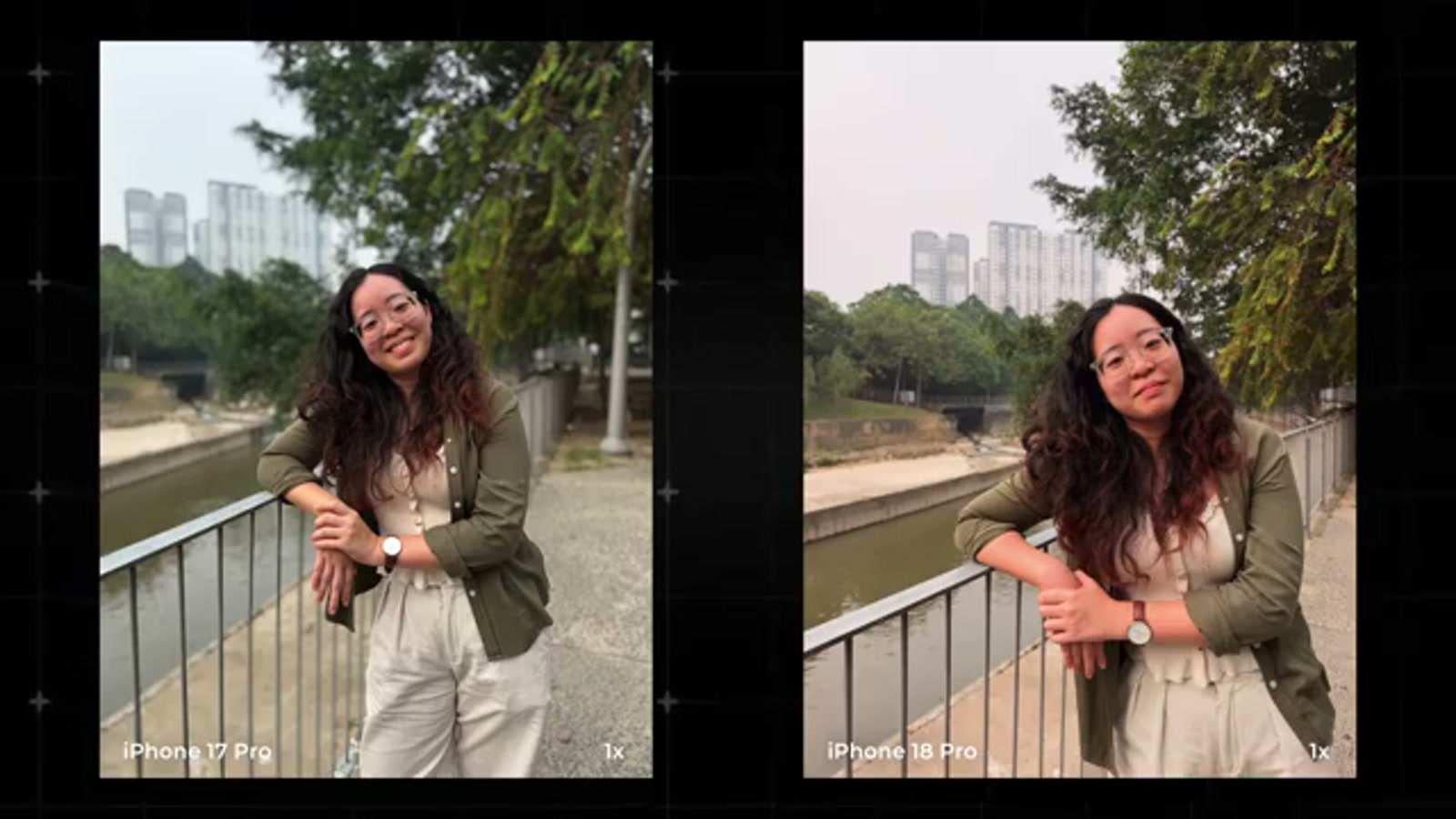
Portrait mode is where the 18 Pro edges ahead. At 1x, edge separation around hair is cleaner on the 18 Pro than the 17 Pro, and the gap gets more obvious at 2x and 4x. In our shots, the 18 Pro cleans up flyaway hair strands the 17 Pro leaves fuzzy. It is a small win, but a real one.
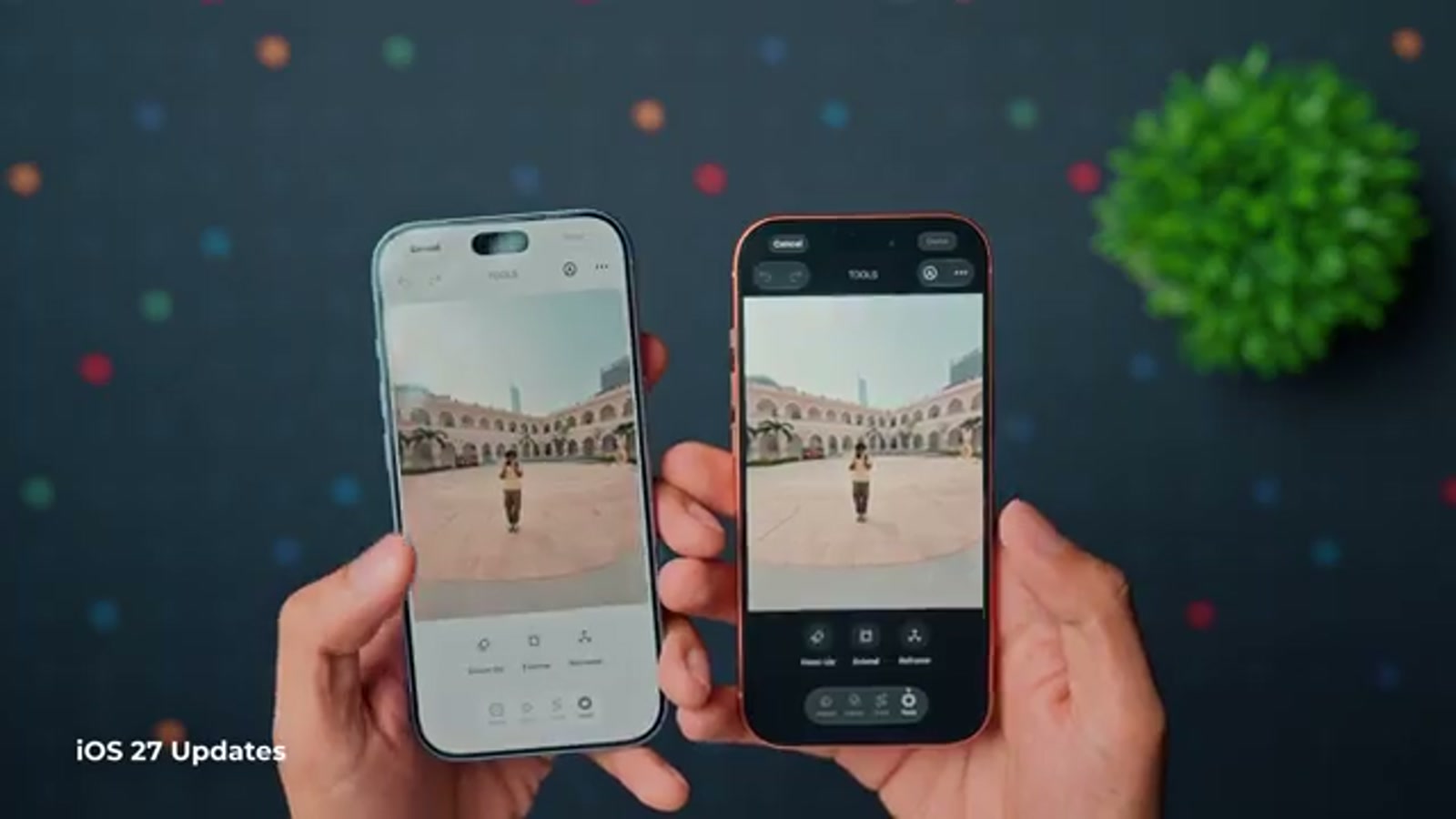
iOS 27's new AI editing tools, Clean Up, Extend and Reframe, ran at close to the same speed on both phones in our test, with the 18 Pro coming out slightly faster on Clean Up and the 17 Pro edging it on Extend. The 18 Pro's Extend output looked more natural in the foreground and kept a shadow consistent with the sun's position in the frame, which the 17 Pro's result did not quite match.
The variable aperture, actually used
The headline change is real: the 18 Pro is the first iPhone with a variable aperture, four settings from f/1.48 to f/1.8, f/2.8 and f/4, controlled by six aperture blades. Every iPhone before it had one fixed opening per lens.
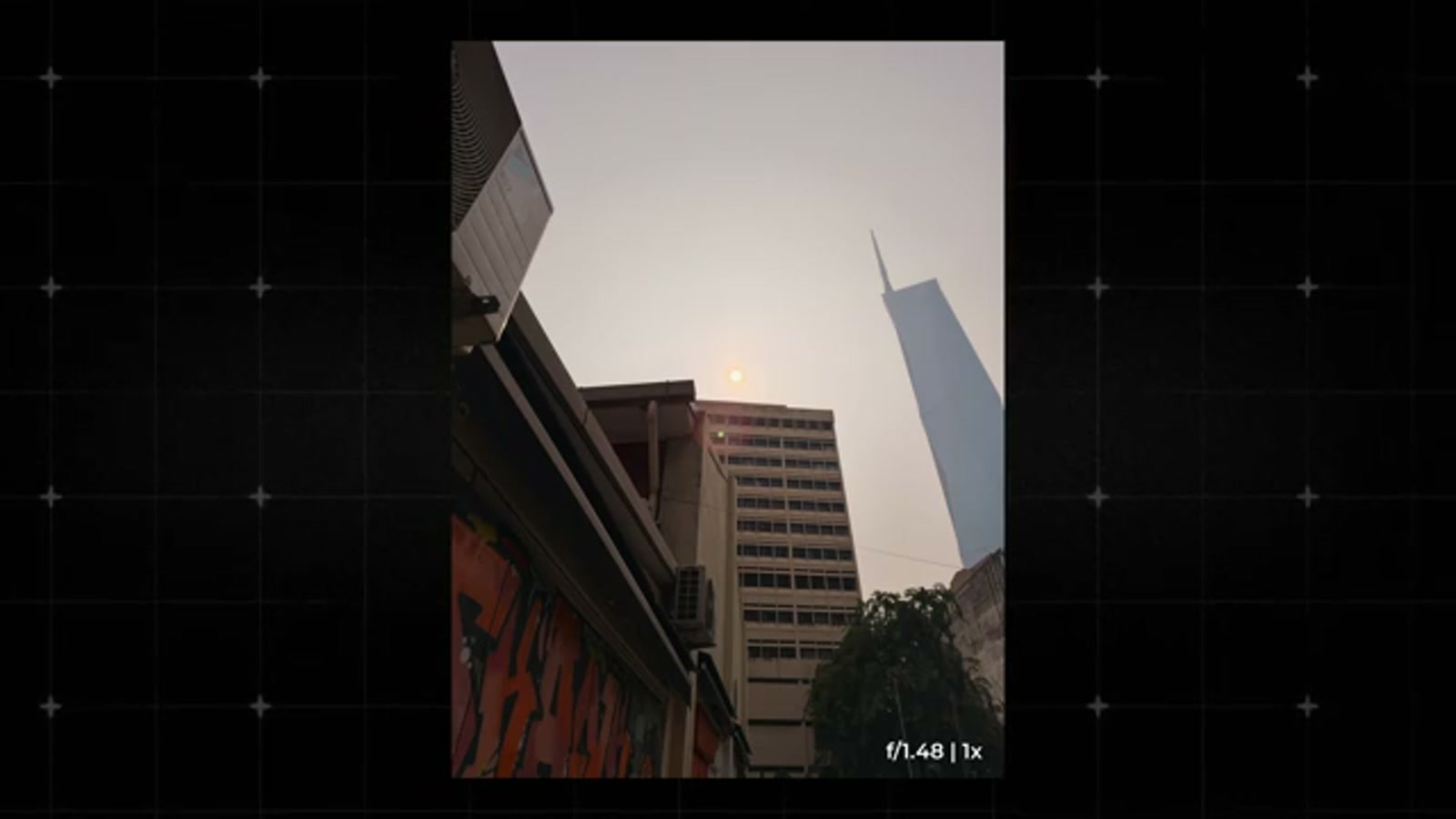
Six blades mean a six-point star forms on bright highlights and the sun, a lens flare effect earlier iPhones physically could not produce because their aperture was fixed and had no blades to shape. At the wide end, the optical blur it produces is different from the computed blur in Cinematic mode: the falloff from a sharp foreground to a soft background is smoother, and it holds up on fine detail like loose cotton threads and hair.
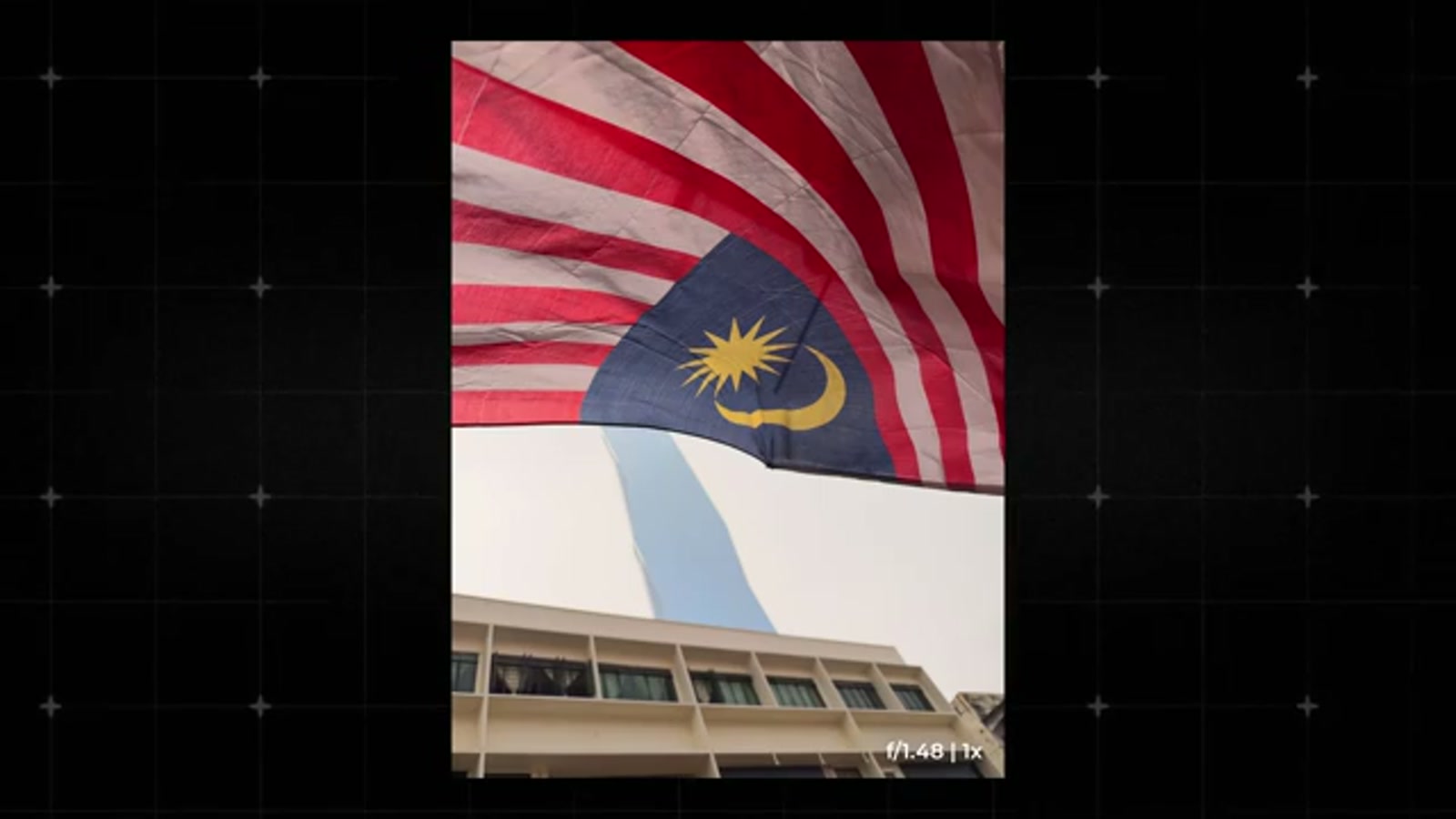
Photographic styles now include film grain
Photographic styles have been on iPhone for a while, letting you set warmth, coolness and saturation before the shutter fires. The 18 Pro adds two things we were not expecting: film grain that Apple says is modelled on how real film grain behaves differently in highlights, midtones and shadows, and applies automatically less in bright images and more in dark ones; and hellation, the warm glow that appears around bright lights in old film photographs. There is also a skin-softening slider that removes sharpness rather than blurring the whole face. Grain is a simple on or off switch because the camera analyses the image itself to decide how much to apply; film, glow and skin softening are intensity sliders you set once as a default.
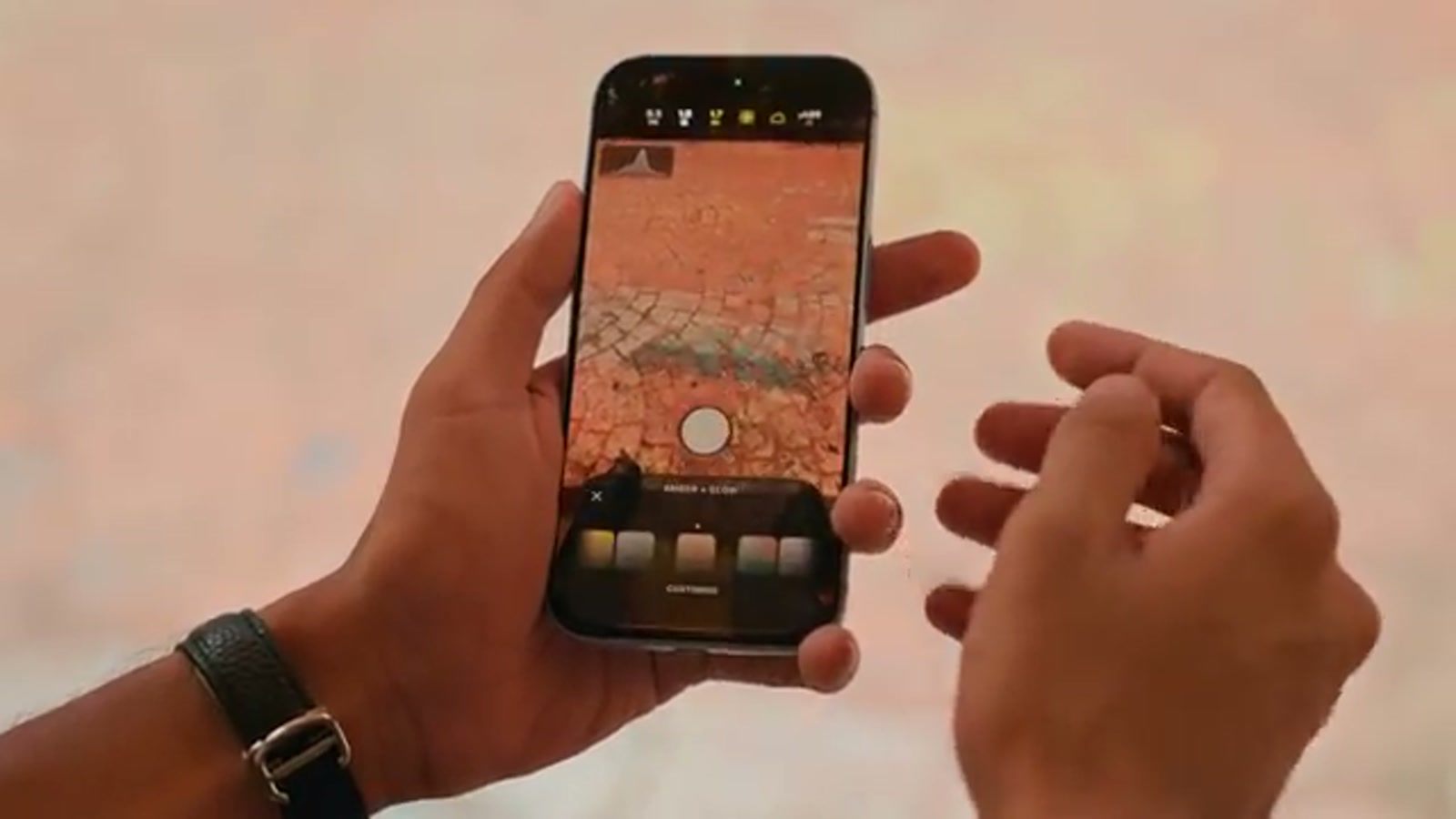
Pro Controls, now built into the native app
The native camera app now exposes white balance, shutter speed, aperture, exposure and a live histogram, without a third-party app. We used to shoot our videos through Blackmagic Camera for exactly these controls; on the 18 Pro, a lot of that reason to leave the native app is gone. Pro Controls now also work on the front camera, which makes controlled selfies possible for the first time.
Video: cinematic 60fps, focus tracking, better audio mix
On video, the 18 Pro adds cinematic mode at 60fps, where the 17 Pro was capped at 30fps, plus post-capture cinematic effects you can apply after filming, and 4K timelines for timelapse. Subject focus tracking is new too: lock onto a person, have them leave frame and re-enter, and the 18 Pro keeps tracking them; the 17 Pro cannot do this at all. Audio Mix, which isolates voices from background noise, now also isolates musical instruments, not just speech.
Thermal performance felt about the same as the 17 Pro in our hands, in Malaysian heat, with no difference large enough to call.
Our verdict
Is the 18 Pro a better camera than the 17 Pro? Yes, and we will keep using the upgrades: the photographic styles improve straight-out-of-camera photos, the variable aperture gives more control over how an image is composed, and 4K 60fps cinematic plus the native Pro Controls make it a better tool for what we actually do. But if you are an everyday shooter who does not care about any of that, the 17 Pro's core specs are close enough that we would not tell you to upgrade for the camera alone. In Malaysia, the 18 Pro launched at RM5,499 for the 256GB model and RM5,999 for 512GB, which is the gap you are paying for these changes.
Every pro control now living inside the native app is also why we are building a follow-up Pocket Cinematic episode on the 18 Pro specifically, because for the first time we barely needed to open Blackmagic Camera to get a cinematic result. If you want the full workflow we use on our own videos, on the phone already in your pocket, that is what our Pocket Cinematic course teaches.