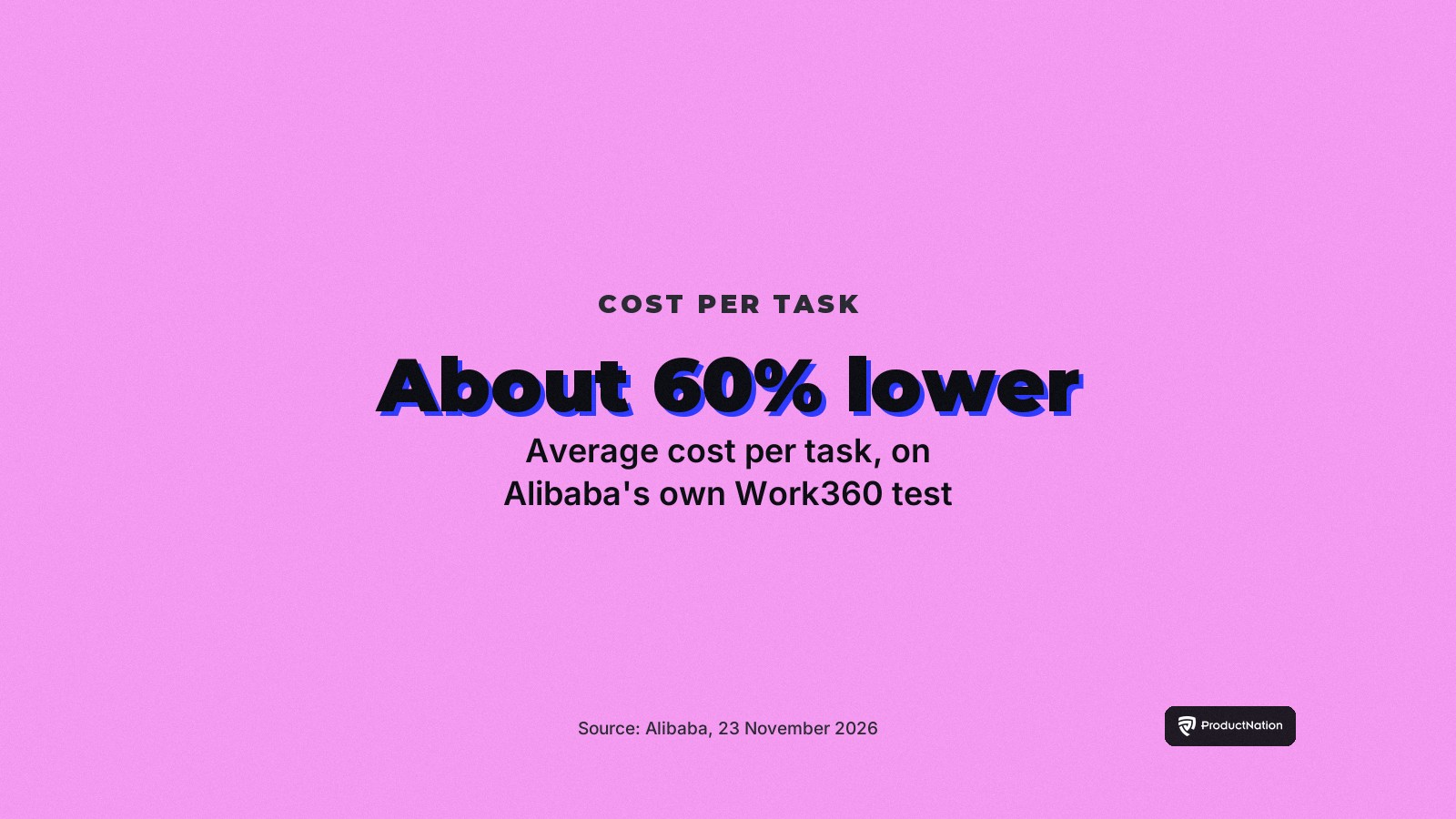
If you pay for AI by the token, through an app you build or a tool your team uses at work, the number that matters in Alibaba's latest model is not its size. It is the bill. Qwen4-Max, released on 23 November 2026, does more of the same work for less: Alibaba says it cuts the average cost per task by around 60% compared with the previous flagship.
Contents
Quick facts
- Model: Qwen4-Max, the new top model in Alibaba's Qwen family
- Size: 2.4 trillion total parameters, 71 billion active per token
- Context window: one million tokens, with native vision
- Where: QwenCloud (Token Plan and API), QwenWork and QwenStudio, available now
What Qwen4-Max changes
Qwen4-Max replaces Qwen3.8-Max at the top of the range. Both models sit at the same 2.4 trillion parameter scale, but the new one switches on fewer of them for each word it produces: 71 billion, which Alibaba puts at 25% fewer active parameters than before. That is the Mixture-of-Experts idea, where only the parts of the model a task needs do the work, and Alibaba says the Qwen4 design now applies it to more of the model's internals.
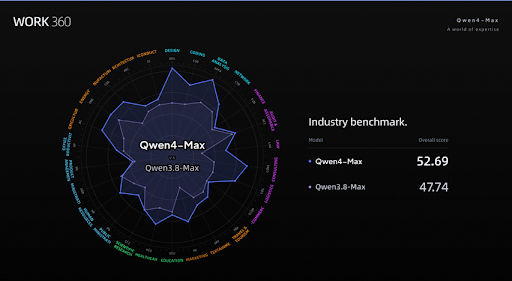
The practical result, on Alibaba's own Work360 test of industry tasks across 721 specialised fields, is that Qwen4-Max scores higher overall than Qwen3.8-Max while using 35% fewer tokens in its High effort reasoning mode. Fewer tokens is where the roughly 60% cost saving per task comes from. Work360 is Alibaba's internal benchmark, so treat those figures as the company's claim until independent testing catches up.
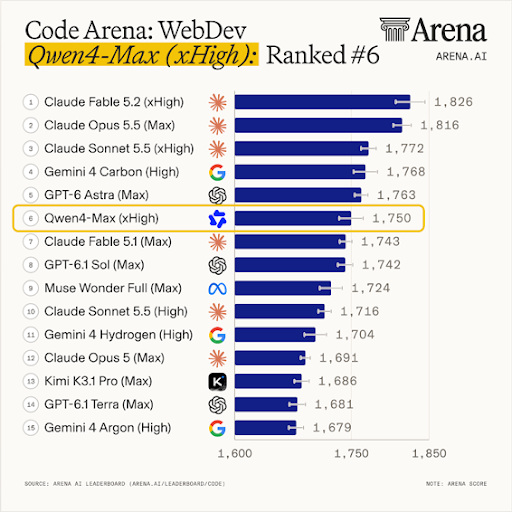
On a public leaderboard, Qwen4-Max ranked 6th on Code Arena, which pits models against each other on real web development tasks. Alibaba also cites results on agent and workplace benchmarks including Agents' Last Exam, Vals Index, JobBench and Chartography.
Where Qwen4-Max has been put to work
Alibaba's examples lean towards long, multi-step jobs rather than chat:
- Manufacturing: in an automotive showcase, the model cut manual workpiece programming from about 475 minutes to 24 by checking its own machining plans for overcuts before any metal was touched.
- Cloud scheduling: running in a closed loop on its own scheduling workflows, it reduced data-annotation model call costs by an average of 9% and sped up offline CPU rescheduling by more than 14 times.
- Science: a continuous 48-hour agent run went through four rounds of design, synthesis, testing and learning to find a coolant molecule for chip cooling that was then validated in the lab. In Alzheimer's research it made 454 tool calls to design and refine 24 candidate molecules.
Alibaba also names 3D modelling, game development and agent-driven video creation among the creative uses, alongside finance, law and healthcare deployments.
What this means in Malaysia
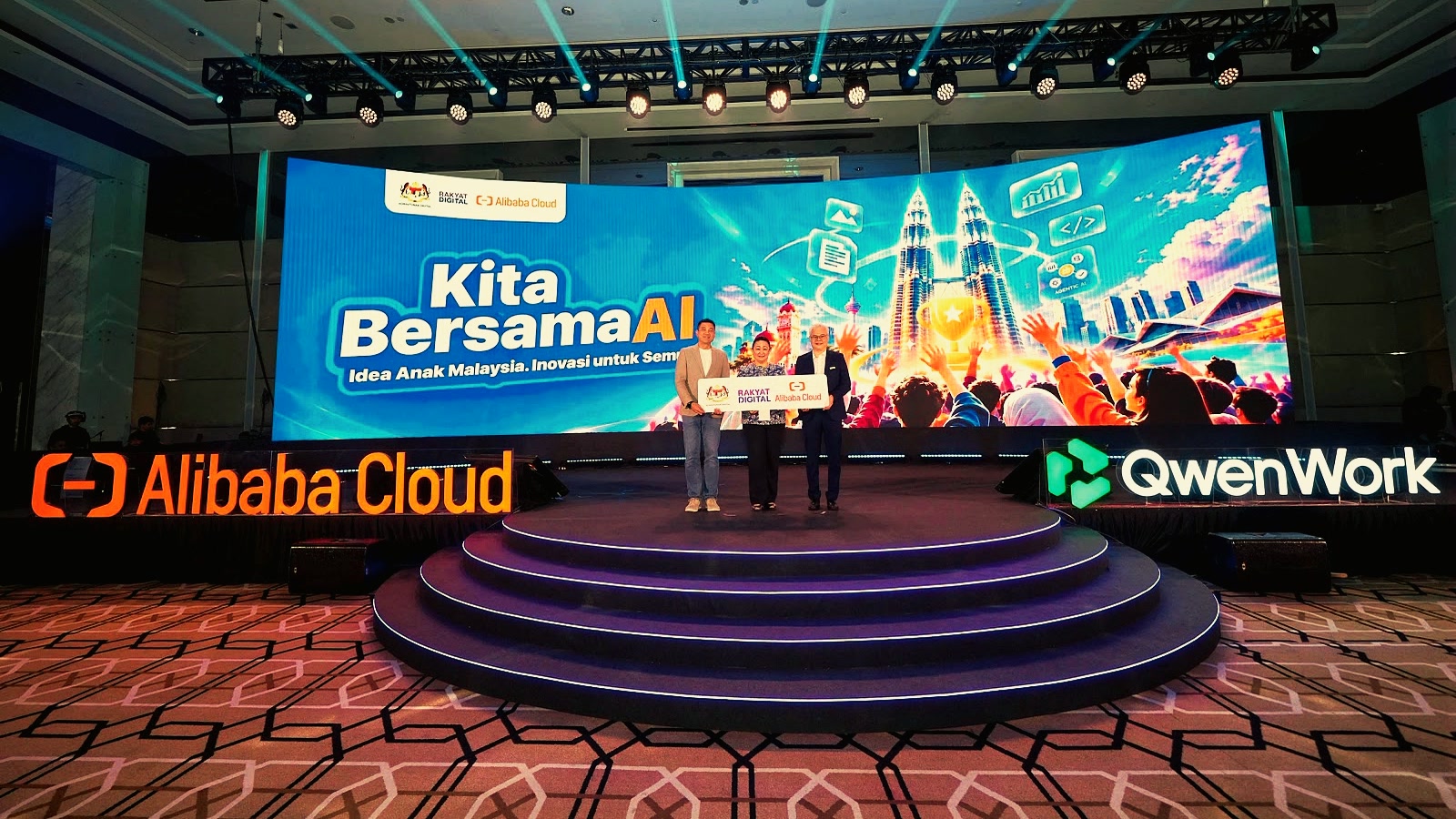
Qwen4-Max is not entirely new to Malaysian readers. Alibaba Cloud showed it at Qwen Conference Malaysia 2026 last week, where it also opened the Kita Bersama AI contest for Malaysians aged 18 to 30 and brought its sixth Malaysian data centre online in Johor. The 23 November release is the full launch, with the pricing and efficiency details that were missing then.
For developers, the model is on QwenCloud through the Token Plan and the API. The one price Alibaba has published is for cached input (an implicit cache hit), at US$0.075 per million tokens; the release does not list standard input or output rates. Alibaba also says smaller Qwen4 models with open weights will be released to developers worldwide soon, which matters for anyone who wants to run a model on their own hardware instead of paying per token.
The Qwen name is also spreading beyond software, from Alibaba's own Qwen glasses, earbuds and AI computer to the assistants inside partner phones.
The takeaway
Qwen4-Max competes on cost as much as capability. If Alibaba's numbers hold up outside its own benchmark, Malaysian teams already building on QwenCloud get a stronger model for less per task, and the open-weight Qwen4 models still to come may be the more interesting release for everyone else.
Images courtesy of Alibaba and Alibaba Cloud.