
Electricity keeps getting more expensive across Southeast Asia, and some of the steepest bills land on buildings that went up decades ago. Older office towers, hotels and malls were rarely designed with efficiency in mind, so cooling them costs a little more every year. Samsung's answer is an AI HVAC pitch: upgrade the air-conditioning rather than knock the building down, and let software decide how hard it runs.
Quick facts
Contents
- Samsung pairs its DVM S2 air-conditioning with SmartThings Pro software for existing buildings.
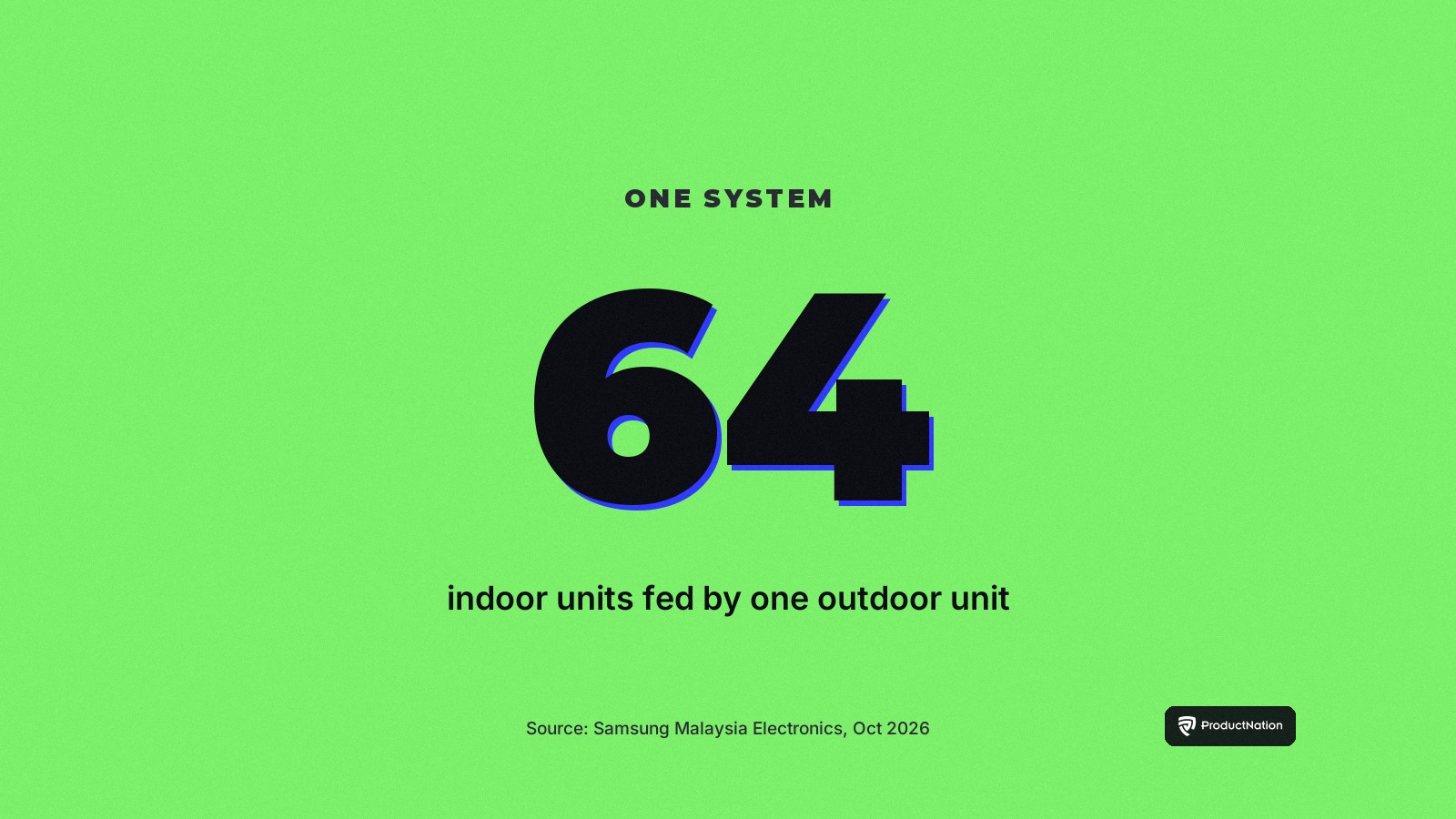
- One DVM S2 outdoor unit can feed up to 64 indoor units.
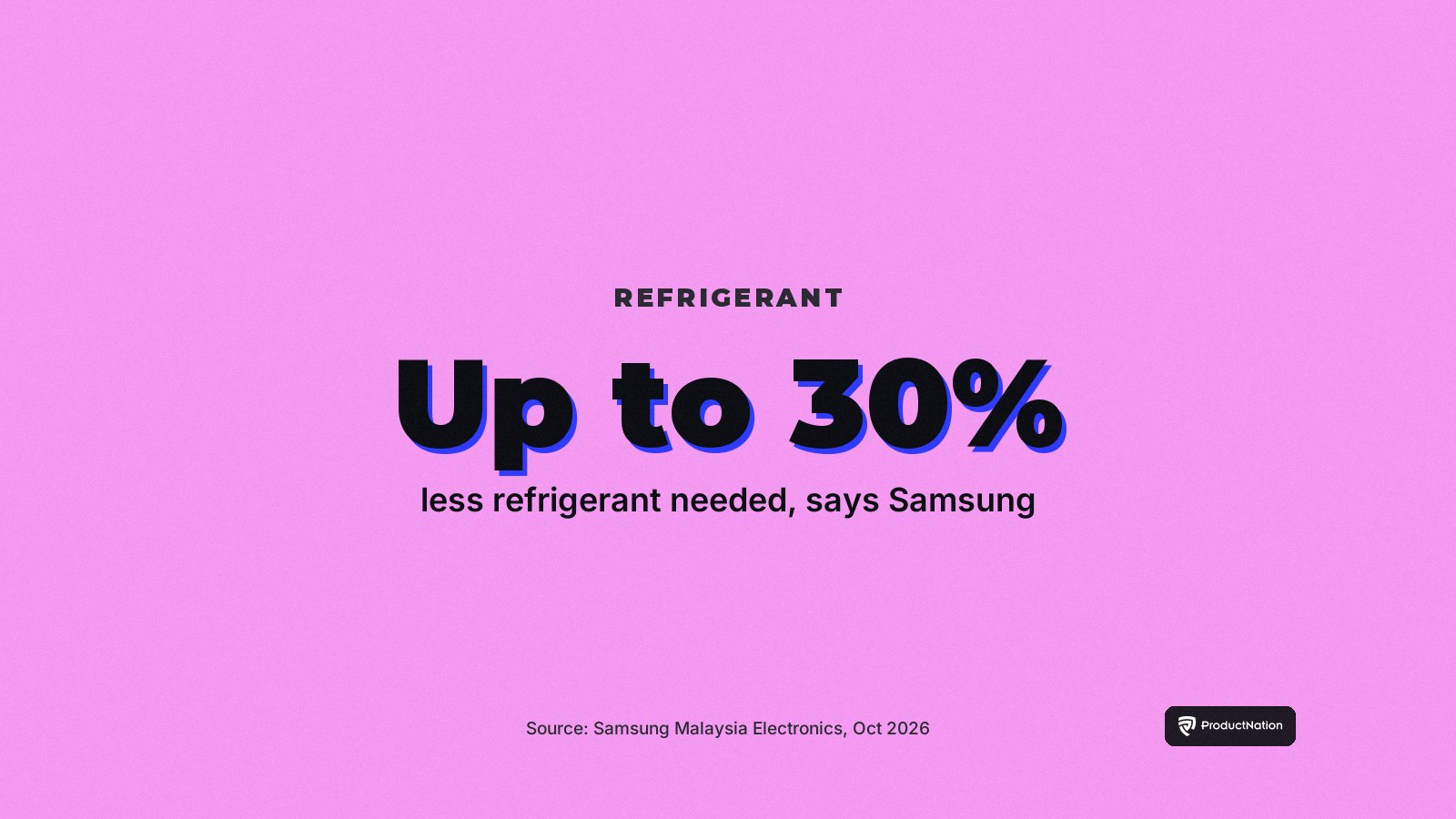
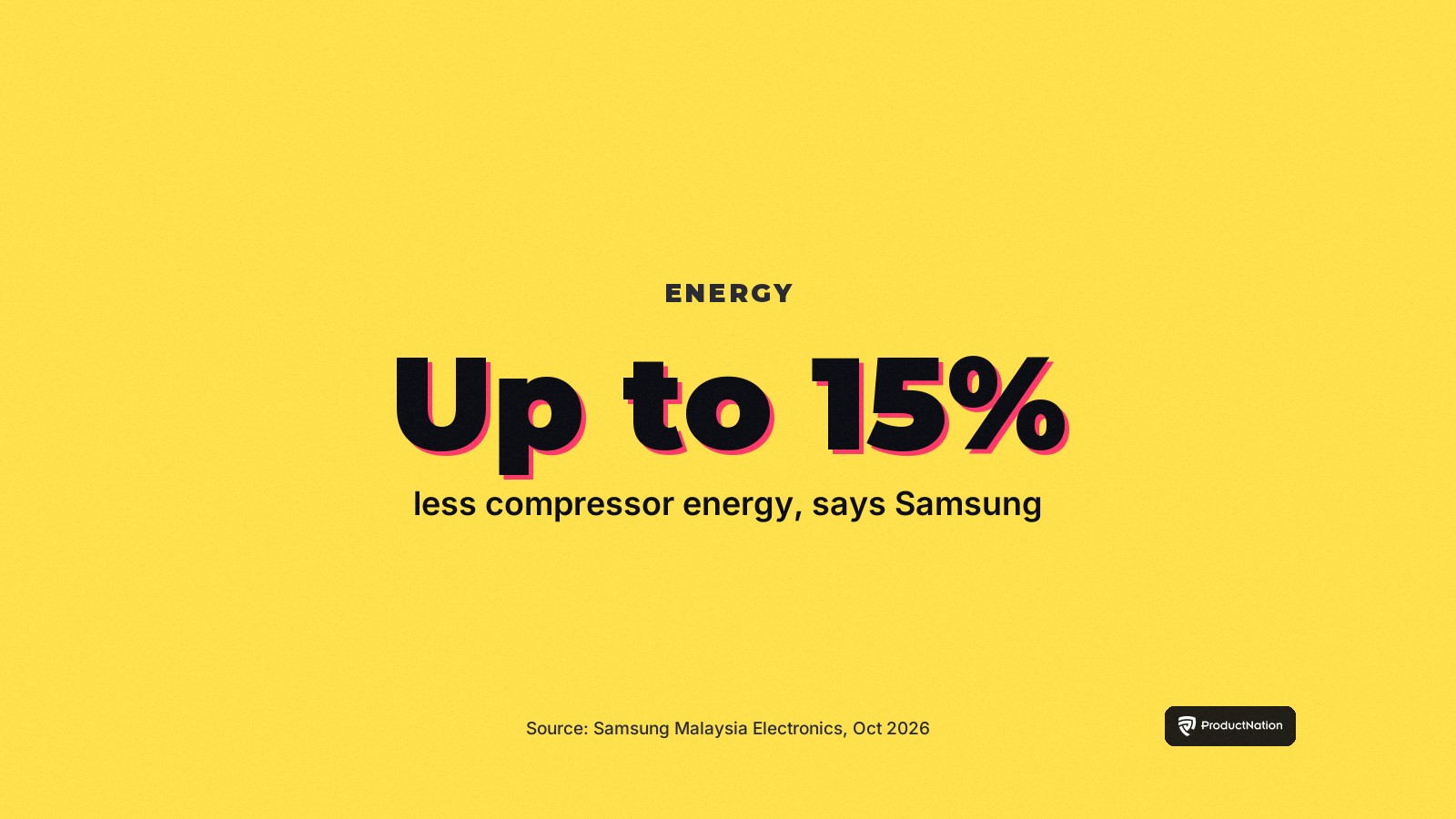
- Samsung says it needs up to 30% less refrigerant and trims compressor energy by up to 15%.
- No Malaysian pricing: installations are quoted per site.
What Samsung's AI HVAC actually does
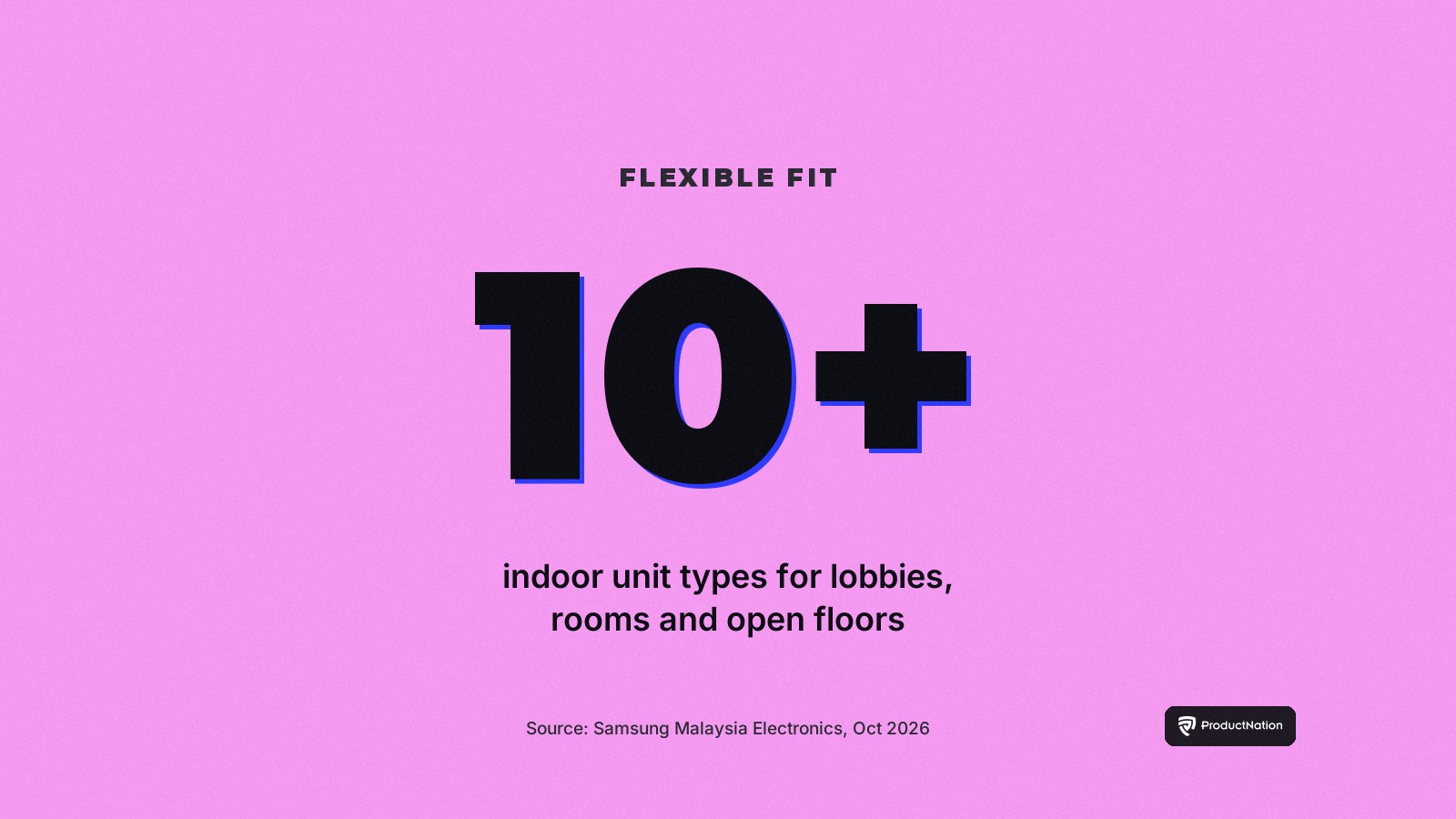
The idea rests on two products working together. The DVM S2 is a variable refrigerant flow system, which means one outdoor unit can feed as many as 64 indoor units through shared piping. Samsung says sub-cooling control and a smaller main liquid pipe cut the refrigerant a building needs by up to 30 percent, and that more than ten indoor unit types let a single system thread through occupied lobbies, guest rooms and open-plan floors without major structural work.
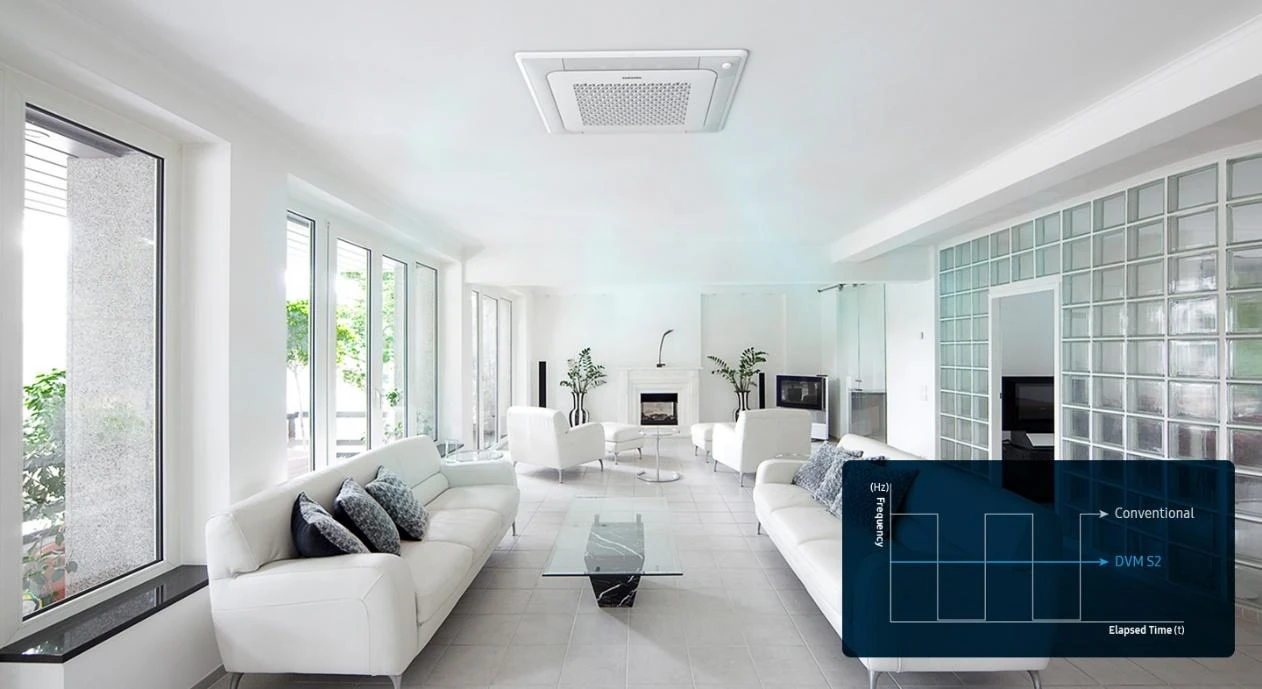
Sitting on top is SmartThings Pro, the building-management layer built on the same SmartThings platform Samsung has been expanding on the consumer side. Its AI Energy Mode reads live occupancy, weather and electricity tariffs, then decides how hard each unit should work from moment to moment. The DVM S2 learns a building's cooling patterns and holds target temperatures and pressures instead of running flat out, which Samsung says trims compressor energy use by up to 15 percent.
Why retrofits, not rebuilds
Heating, ventilation and air conditioning is the fastest-growing source of energy demand in buildings, and it is also the system easiest to replace without gutting a structure. That combination is why Samsung is aiming at retrofits: swapping the cooling system pays back faster than a teardown, which is slow and carbon-heavy. For owners watching tariffs climb, the question moves from whether to modernise to how. The energy story in the region is turning into an AI story too, and AI is already working its way into Malaysia's energy infrastructure.
Buildings that keep tuning themselves
The appeal Samsung leans on is that the system does not stop improving after installation. It keeps reading indoor conditions and responding in real time, easing demand on empty floors and shifting load away from peak-tariff hours. Because the DVM S2 and SmartThings Pro share one platform, a facilities team can watch an entire estate from a single dashboard, with energy analytics and early fault warnings. Predictive maintenance and remote diagnostics can flag a struggling compressor or a refrigerant leak before an engineer has to be dispatched, which is where much of the long-term saving actually sits.
Where it is being used
Samsung points to the Bali Beach Hotel Sanur, which fitted its DVM solution across lobbies, spa rooms and fitness centres to tune cooling to each space while keeping a heritage building intact. The same approach is going into new developments, including Grantz Forest Park, a mixed-use project planned for Cebu in the Philippines, where SmartThings Pro and Samsung's b.IoT building solution will manage HVAC, lighting and power together.
The release comes from Samsung Malaysia Electronics, though it does not give local pricing or name specific Malaysian buildings, so anyone weighing it here would need a quote based on the site and the mix of indoor units.
The takeaway
New construction tends to get framed as the only real progress. But across Southeast Asia and Oceania thousands of buildings already stand and already burn a lot of power on cooling, and that is the gap Samsung is going after. Its bet is that the bigger opportunity is upgrading what is there, and that an air-conditioning system which manages its own energy is a sensible place to start.


