Malaysian handheld gamers have a new feature to track before a year-end upgrade. AMD plans to bring FSR 4, its AI upscaling that can lift frame rates without a faster chip, to handheld gaming PCs by the end of 2026, according to comments from its consumer chip boss reported by The Verge. Exactly which models get it, and whether that includes a ROG Ally you already own, is not yet settled.
Contents
What AMD actually said
AMD's consumer chip boss, Jack Huynh, told Korean outlet The Elec, as reported by The Verge, that the company will expand its "machine learning AI-based FSR 4 technology" to its "entire product line including APUs, gaming laptops, and handheld devices by the end of this year". FSR 4 first appeared on AMD's desktop graphics cards, so getting it onto the low-power chips inside handhelds would be a real step rather than a rebadge.
The detail worth reading twice comes next. The Verge reports that two things are expected by year end: a new AMD chip, and a lighter version of FSR 4 built to run on AMD's existing APUs, the processors inside current laptops and handhelds. What is not clear from the reporting is whether that lighter model reaches handhelds specifically, or whether fuller support waits for AMD's next handheld chips. AMD did not clarify to The Verge, and one of its executives had earlier cautioned that a device needs "a sufficient amount of compute" for FSR 4 to be worth switching on. Valve and AMD have also been working on FSR 4 for the Steam Machine's chip, the report notes, but Valve has not committed to the same for the Steam Deck.

Why it matters more on a handheld
On a desktop with a large graphics card, upscaling is a nice extra. On a handheld, with its small battery and modest integrated chip, it can matter more: rendering a game at a lower resolution and rebuilding a sharper image can lift frame rates, though how much depends on the game, the settings and the hardware. That is the kind of software gain that can stretch what a mid-range handheld manages, which is why AMD extending it to this class of device is worth noting even before the details are clear.
What it means for buyers in Malaysia
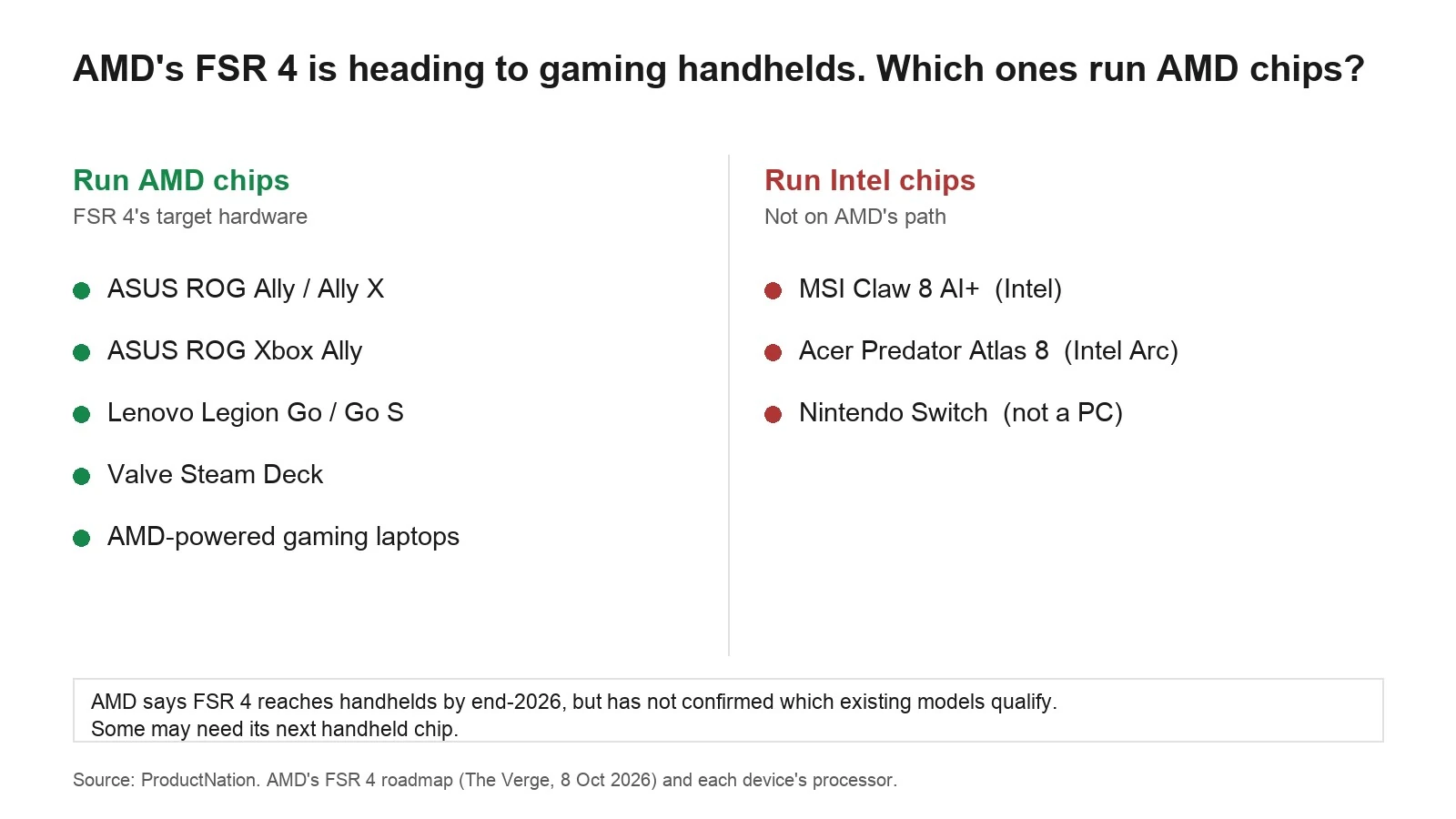
The handhelds Malaysians tend to look at are built on AMD processors. The ASUS ROG Ally arrived here at RM3,299, as we reported at its launch, and the Ally X, Lenovo's Legion Go and the newer ROG Xbox Ally all use AMD chips, per each maker's published specifications. The popular Steam Deck is also AMD-based, though it reaches Malaysia mainly through parallel importers rather than an official channel. An AMD chip is the starting point for FSR 4, but as above, AMD has not said which of these existing models will actually get it. The clear exceptions are the Intel-based handhelds, such as the Intel version of the MSI Claw, which sit outside the plan entirely.
So the honest advice before the 10.10 and year-end sales: if FSR 4 is the reason you are buying, do not assume the discounted ROG Ally on the shelf today will definitely get official support, because the reporting leaves which existing models qualify unresolved. If you already own a handheld, treat official FSR 4 as a maybe rather than a promise, even though The Verge notes it can already be run unofficially on hardware as old as the Steam Deck. Paying extra now for a feature that is not yet firm is the wrong way round.
AMD says FSR 4 is coming to this class of device. Which machines, in what form, and whether yours is one of them, is what to wait to hear before you spend.
Image courtesy of Back2Gaming on Unsplash.