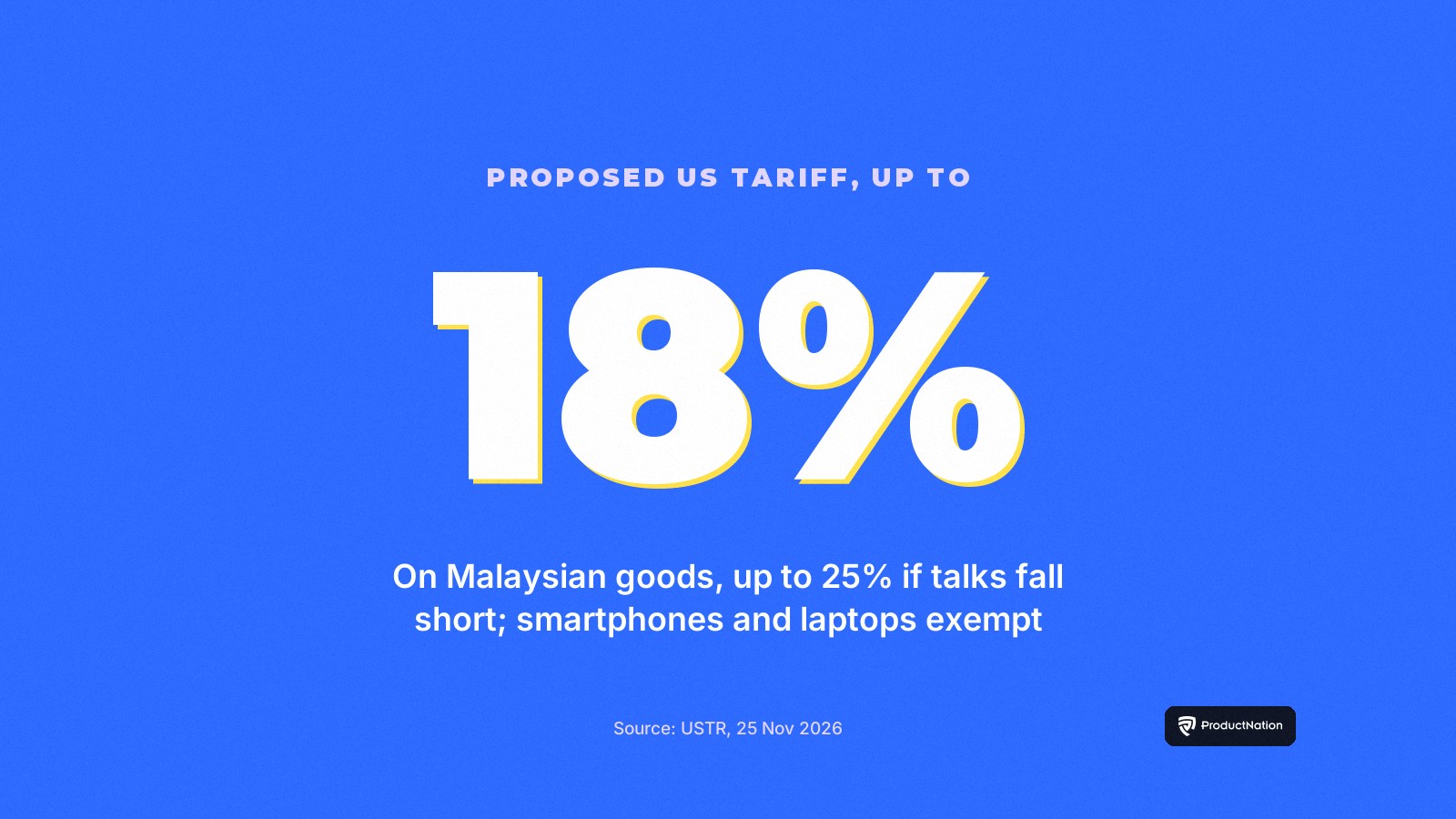
The US Trade Representative has proposed tariffs of up to 18% on Malaysian goods, net of existing Section 301 tariffs, in one of 14 determinations published on 25 November 2026, and its proposed exemption list keeps smartphones and laptops out of the new tariff.
Quick facts
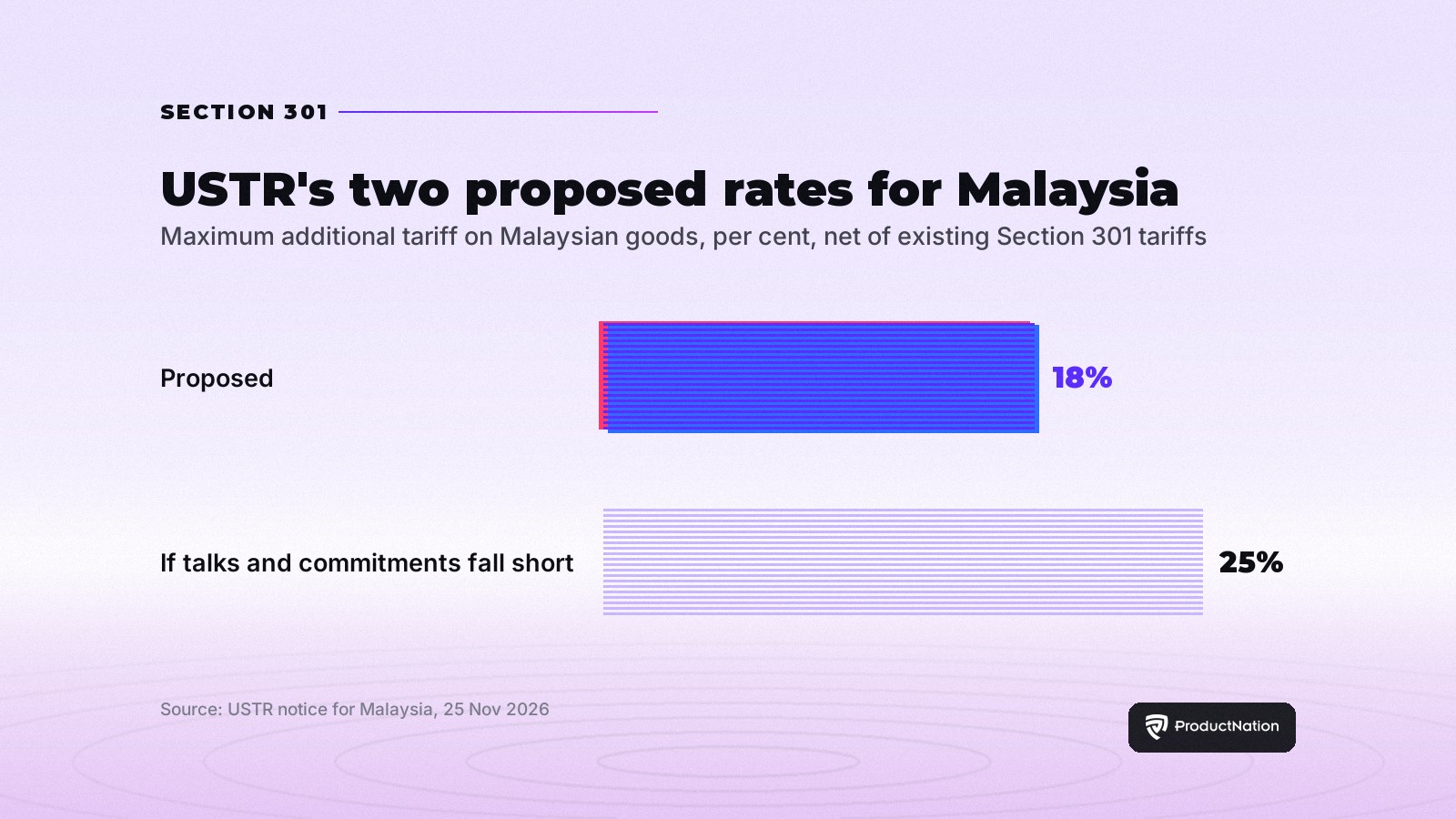
- Proposed rate: up to 18% on Malaysian goods, or up to 25% if USTR finds Malaysia's "ongoing consultations and commitments are unsatisfactory".
- Exempt in the annex: smartphones, portable computers such as laptops, and network routing and switching equipment, among other goods.
- Also excluded: a listed set of goods already under Section 232 tariffs, including semiconductor articles, steel, aluminium, copper, passenger cars, light trucks and their parts.
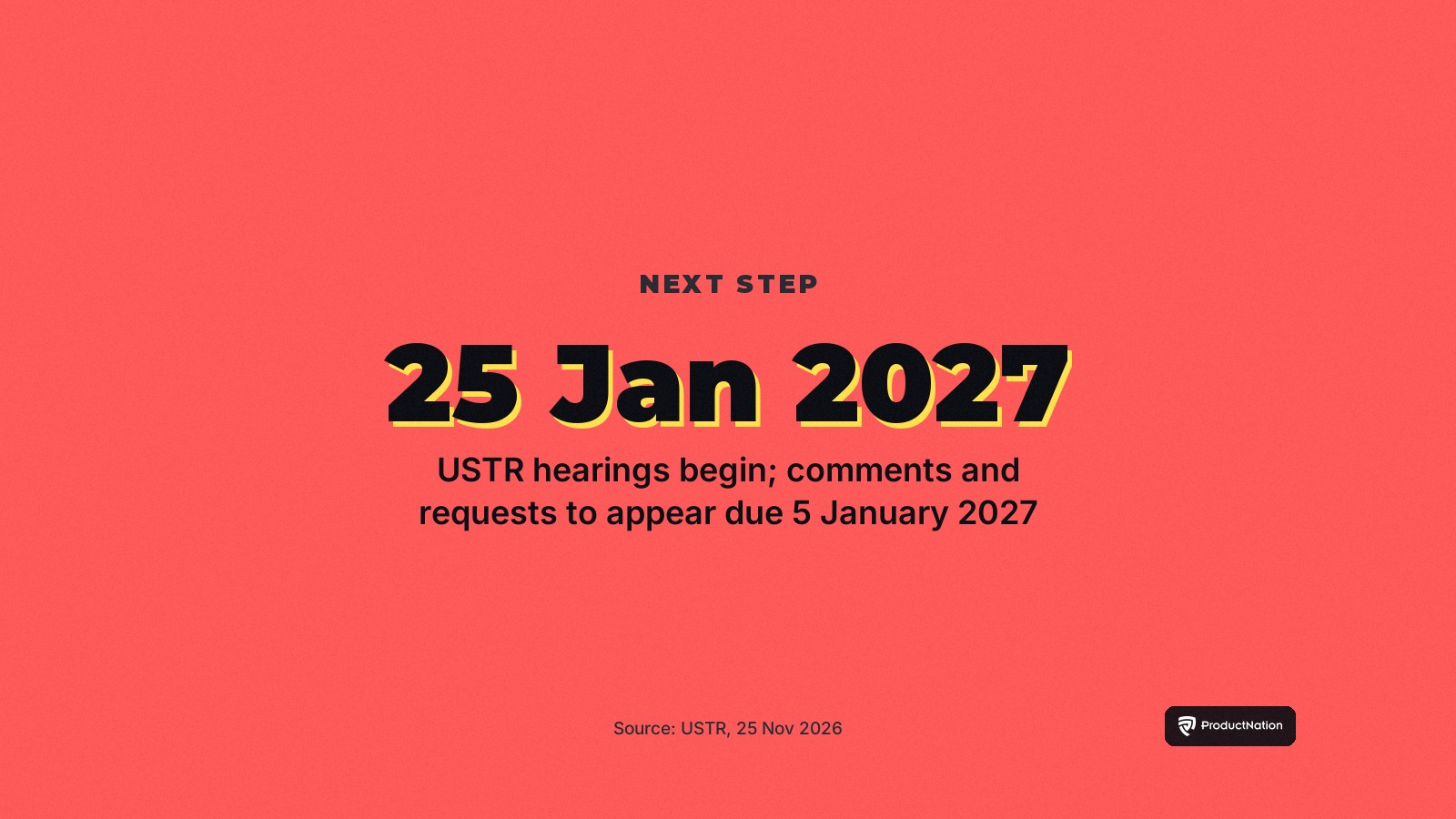
- Not final: written comments are due by 5 January 2027 and hearings start on 25 January 2027.
The proposal comes from USTR's 25 November announcement, which makes determinations in 14 of the 16 Section 301 investigations it opened on 11 March 2026. Malaysia is one of the 14; USTR has not made determinations on Mexico or Norway. It says Malaysia's industrial plans, national funding vehicles, failure to address imports and investment from what it calls non-market economies, and labour rules contribute to "structural excess capacity" that burdens US commerce, "especially" in information and communication technology and automotive.
Two rates on the table
USTR says its 18% figure already accounts for the reciprocal trade agreement between Malaysia and the US dated 26 October 2025, ongoing consultations and existing Section 232 duties. If it finds the consultations and commitments unsatisfactory, it proposes up to 25% instead. The same release uses the same "up to 18 percent" wording for Thailand, Indonesia and Cambodia.
What stays out
USTR's pre-publication Federal Register notice for Malaysia carries an annex of goods "not covered by the proposed action". Smartphones, portable computers and network routing and switching equipment are on it with no scope limit, so if the proposal is adopted as published, a Malaysian-made smartphone or laptop shipped to the US would not pay this new tariff.
Chips are a different case. In August we reported that Malaysian chips had escaped US tariffs while a Section 232 review was pending. The new notice lists semiconductor articles among goods "currently subject to tariffs under Section 232" and excludes them from this action on that basis. The exemption list does not give the Section 232 rate, or say which semiconductor articles it covers or since when. Our September report on Malaysia's chip exports has the background.
The numbers USTR cites
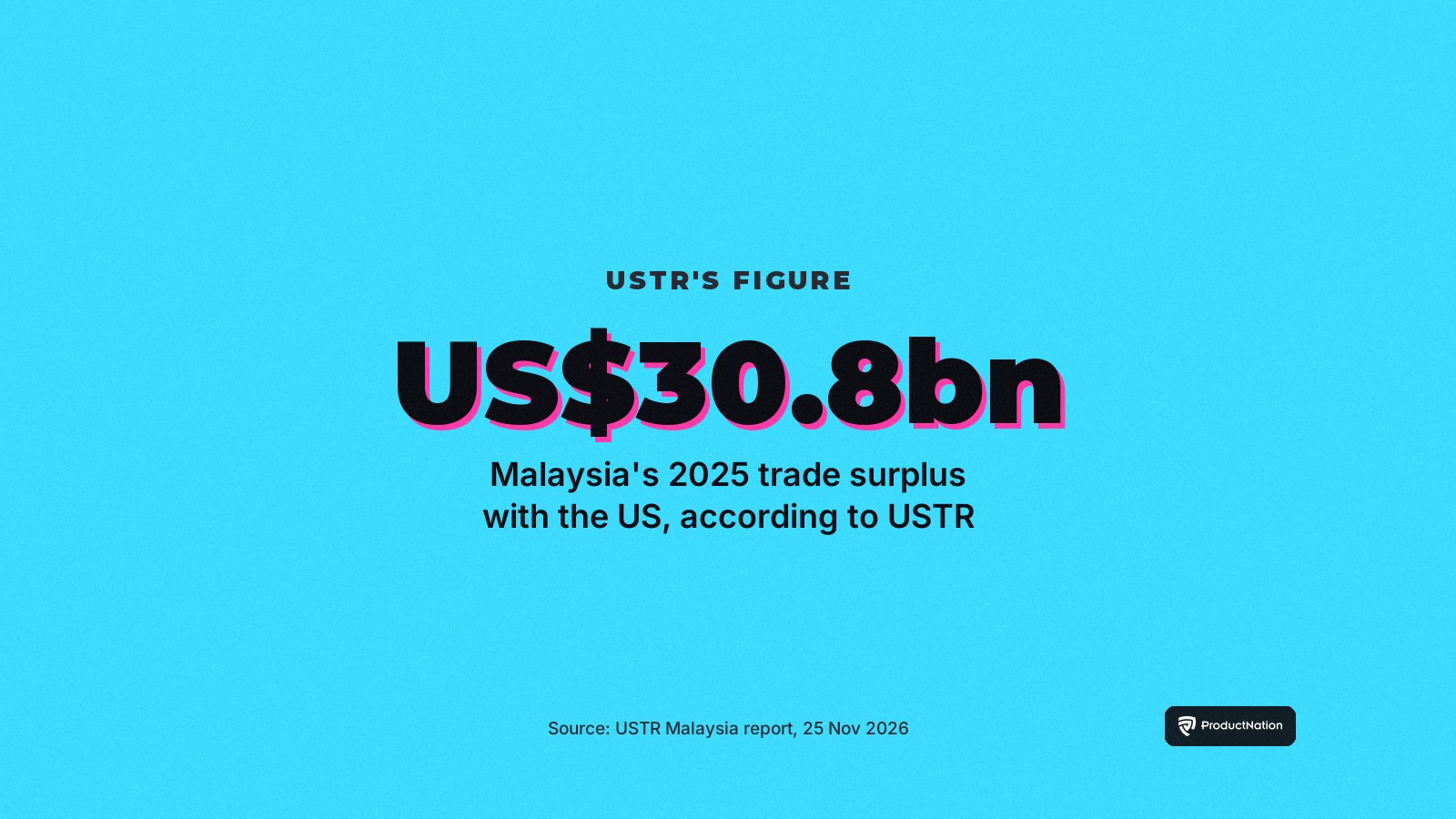
USTR's Malaysia report puts Malaysia's trade surplus with the US at US$30.8 billion in 2025, led by ICT, machinery, consumer goods, health, electrical and automotive products. It says Malaysia's goods exports averaged 80.4% of GDP over 2021 to 2025, against 7.1% for the US. According to the notice, Malaysia's government told USTR that it "does not contribute to structural excess capacity", that its trade regime is rule-based and market-driven, and that its exports complement US production; USTR nonetheless found Malaysia's practices actionable.
None of this is in force yet. Comments and requests to appear at the hearings are due by 5 January 2027, and the hearings begin on 25 January 2027.