Xiaomi's Q3 2026 results show the company holding revenue above RMB100 billion for another quarter while the phone market around it shrank sharply. Total revenue for the three months to 30 September 2026 was RMB107.2 billion (about RM66.19 billion), with adjusted net profit of RMB4.9 billion (about RM3.03 billion). The figures are unaudited and were announced by Xiaomi on 25 November.
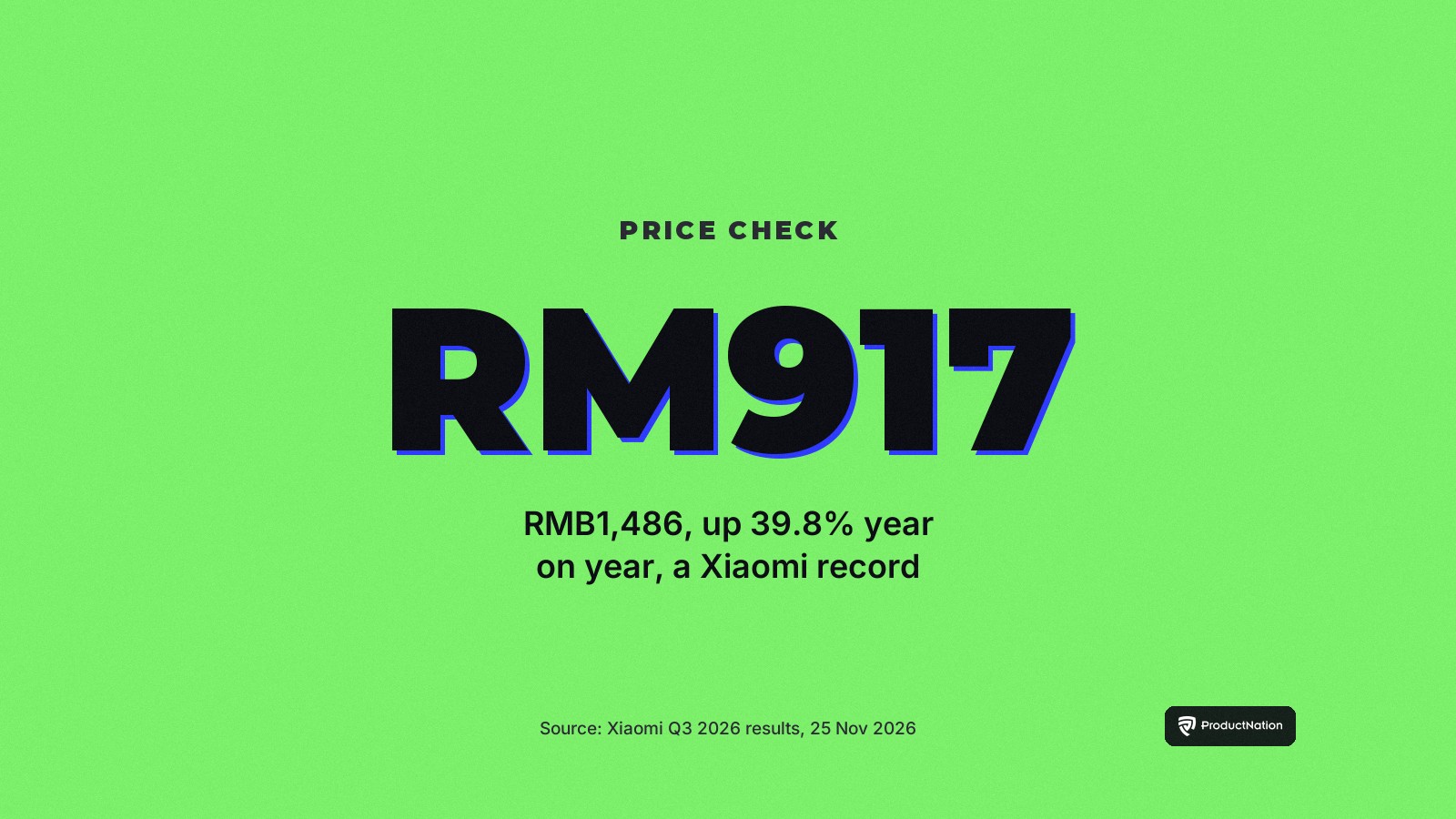
The number that matters most for anyone buying a phone is a different one: the average selling price of a Xiaomi smartphone rose 39.8% year on year to RMB1,486 (about RM917), which Xiaomi calls a record.
Contents
Memory costs are pushing phone prices up
Xiaomi says memory prices rose two to three times from the start of the year, and that global smartphone shipments fell 20% year on year in the quarter, which it describes as the steepest quarterly decline on record. Its response was to ship fewer phones and sell more expensive ones.
- Global smartphone shipments: 30.7 million units
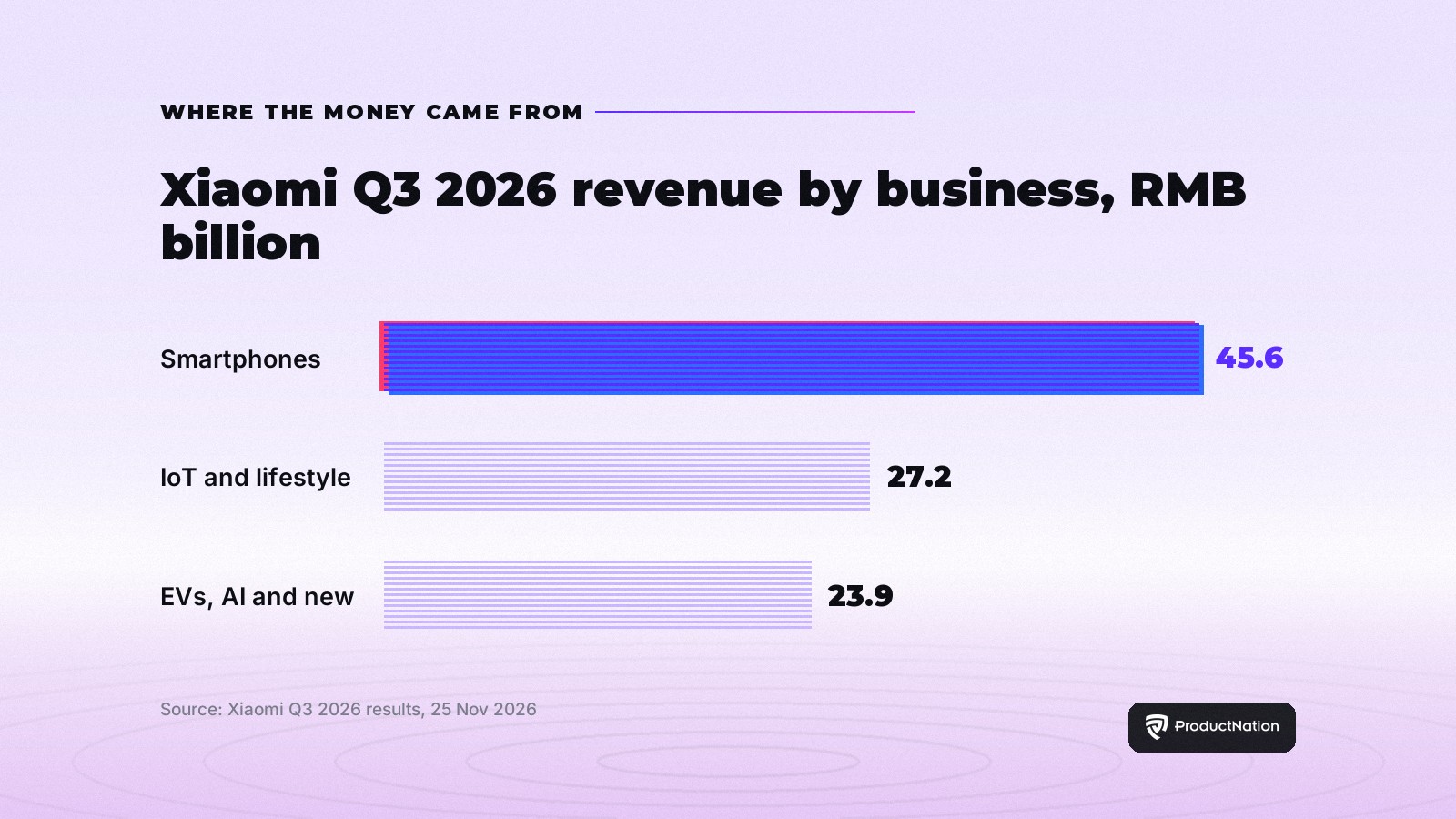
- Smartphone revenue: RMB45.6 billion (about RM28.15 billion), up 8.2% quarter on quarter
- Smartphone gross margin: 9.2%, up 0.6 percentage points quarter on quarter
- Average selling price: RMB1,486 (about RM917), up 39.8% year on year
For Malaysian buyers, this is the same pressure showing up in local launch prices. The Xiaomi 18 Pro series opened Malaysian pre-orders from RM4,499 earlier this month, and Xiaomi says its share of the Chinese Mainland market for phones priced at RMB6,000 (about RM3,704) and above rose 1.2 percentage points year on year.
Xiaomi's market share in Southeast Asia and Malaysia
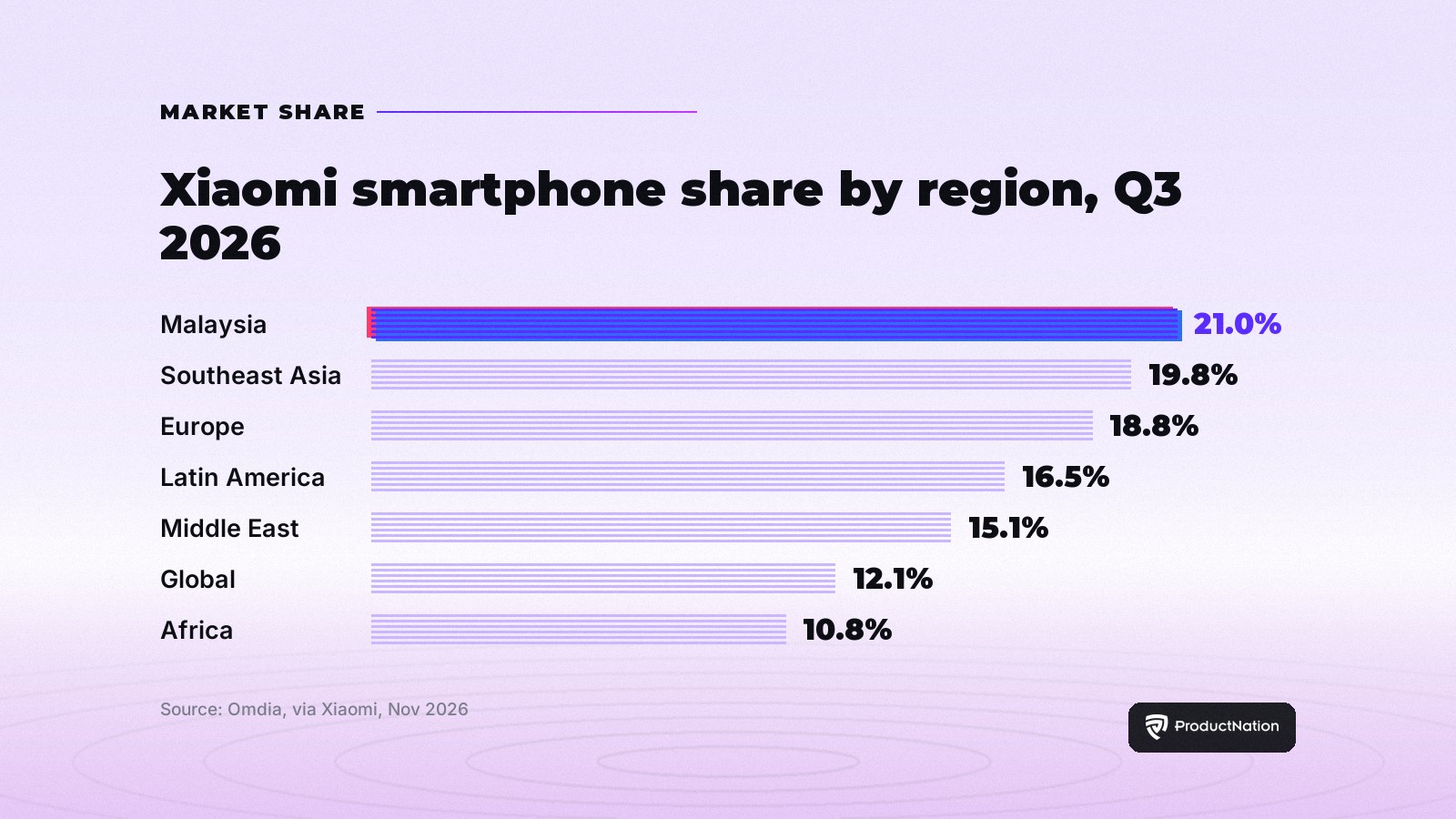
Citing Omdia, Xiaomi says it stayed in the global top three for shipments for the 25th quarter in a row, with global share rising to 12.1%. By region, it ranked second in Southeast Asia with 19.8% share, second in Latin America (16.5%) and the Middle East (15.1%), and third in Europe (18.8%) and Africa (10.8%).
Malaysia sits above that regional figure. Earlier this month Xiaomi said it led Malaysia's Q3 2026 smartphone shipments with 21% share, also citing Omdia.
Cars, smart home and chips
The rest of the business is now a large part of the total. Xiaomi's electric vehicle, AI and new initiatives segment brought in RMB23.9 billion (about RM14.76 billion), of which RMB22.7 billion came from vehicles. Deliveries reached 100,975 cars in the quarter, above 100,000 for the second quarter running, and passed 50,000 in October alone. Xiaomi says its cars will enter European markets in 2027. They are not sold in Malaysia.
The IoT and lifestyle products business, which covers the TVs, tablets, laptops, appliances and wearables Xiaomi sells here, made RMB27.2 billion (about RM16.79 billion), with every key category growing year on year. Connected devices on Xiaomi's platform, excluding phones and tablets, reached 1.2035 billion, up 16.2%.
Research and development spending was RMB9.2 billion (about RM5.68 billion) for the quarter. In August Xiaomi unveiled three in-house chips: the XRING O3 phone processor, already used in the Xiaomi 18 Fold and Xiaomi Pad 9 Pro Max, the XRING O100 AI accelerator, and the XRING D100 for assisted driving. In September it released its MiMo-V2.6 AI models as open source.
Quick facts
- Period: three months to 30 September 2026 (unaudited)
- Revenue: RMB107.2 billion (about RM66.19 billion)
- Adjusted net profit: RMB4.9 billion (about RM3.03 billion)
- Smartphone x AIoT revenue: RMB83.4 billion (about RM51.49 billion), 20.4% gross margin
- Smartphones shipped: 30.7 million
- Cars delivered: 100,975
- Southeast Asia rank: No. 2, 19.8% share (Omdia, via Xiaomi)
Ringgit figures are Xiaomi's own conversions. Xiaomi's investor and newsroom material is on the Xiaomi global newsroom.