
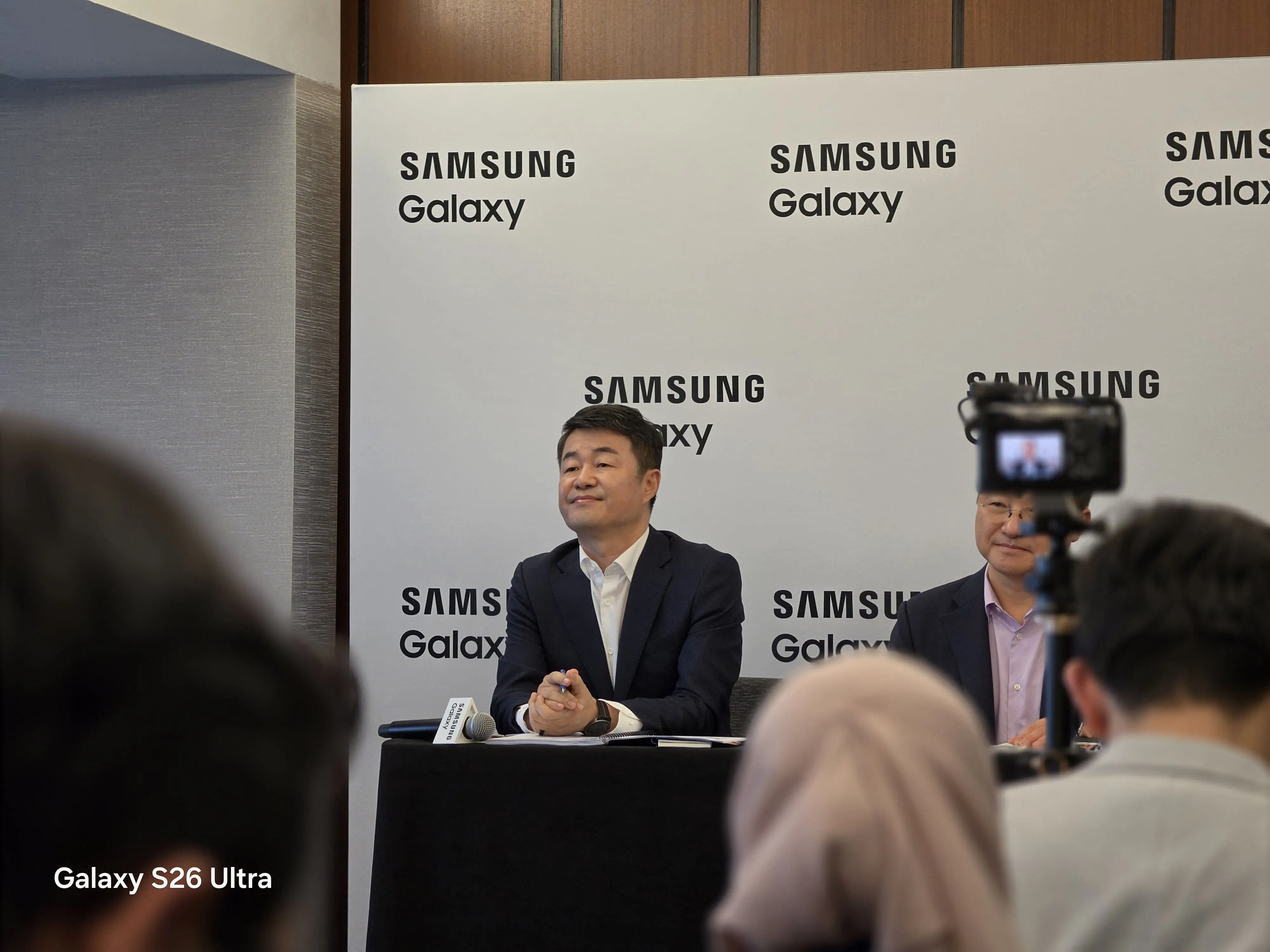
We were at Samsung Galaxy Unpacked in San Francisco on 26 February, and our Creative Director, Umar Naqshbandi, had the chance to ask CU Kim, President & CEO of Samsung Southeast Asia & Oceania, something most people aren't talking about yet: how does agentic AI actually change the bigger picture for Samsung's mobile strategy?
The answer was more interesting than we expected.

Editor
Denise chevron_right
Table of Contents
Think Back to When Smartphones First Happened
CU Kim's framing puts things in perspective. The jump from feature phones to smartphones wasn't just about hardware. In fact, it was about apps and touch navigation completely changing how people interacted with a device. Samsung believes agentic AI is that same kind of shift, happening right now.
The Galaxy S26 is designed around this idea. Instead of waiting for you to tap, swipe, and instruct it, the phone is meant to understand what you actually want... and get ahead of it. Less reactive, more proactive.
Your Phone as the Smart Home Boss
Here's where it gets relevant for anyone invested in the Samsung ecosystem. Samsung makes TVs, washing machines, air conditioners, and wearables, and increasingly, all of them talk to each other. The AI-powered phone is meant to be the device that ties all of that together.
Think of it less as a remote control and more as a coordinator that knows your habits and makes decisions accordingly. For Malaysian households already running multiple Samsung devices, that's a setup worth paying attention to.
They're Not Just Translating English AI Into Local Languages
This is the part that stood out most. Samsung's Southeast Asia commitment isn't just about switching the interface language and calling it localisation.
The numbers: six manufacturing facilities across the region with 48,000 employees, and three R&D centres with 4,000 researchers focused specifically on understanding what the region actually needs.
Kim shared one concrete example that involves Bahasa Indonesia. Instead of just feeding the AI standard language datasets, they went to coffee shops, markets, and workplaces to record real conversations, capturing how intonation and background noise affect how people actually speak. That kind of groundwork matters because AI that doesn't understand how you really talk isn't actually useful; it's just foreign software with a local skin.
What This Means If You're Buying in Malaysia
For Malaysian consumers, this signals something practical: the AI experiences on the S26 won't feel like they were designed elsewhere and shipped over. The goal is for them to feel native or useful in your actual daily context, not just impressive in a demo.
The bigger differentiation going forward won't be about who has the longest spec sheet. It'll be about whose AI actually knows how you live, what you need, and how you speak, and that's a harder thing to copy than a camera upgrade.